

Honor showed off the Play 10 to the world back in early September. Now, about a month later, they’re getting ready to bring it to Pakistan. The company dropped a teaser on Facebook saying it’s “coming soon,” but that’s all we’ve got. No launch date, no price—just a vague promise.

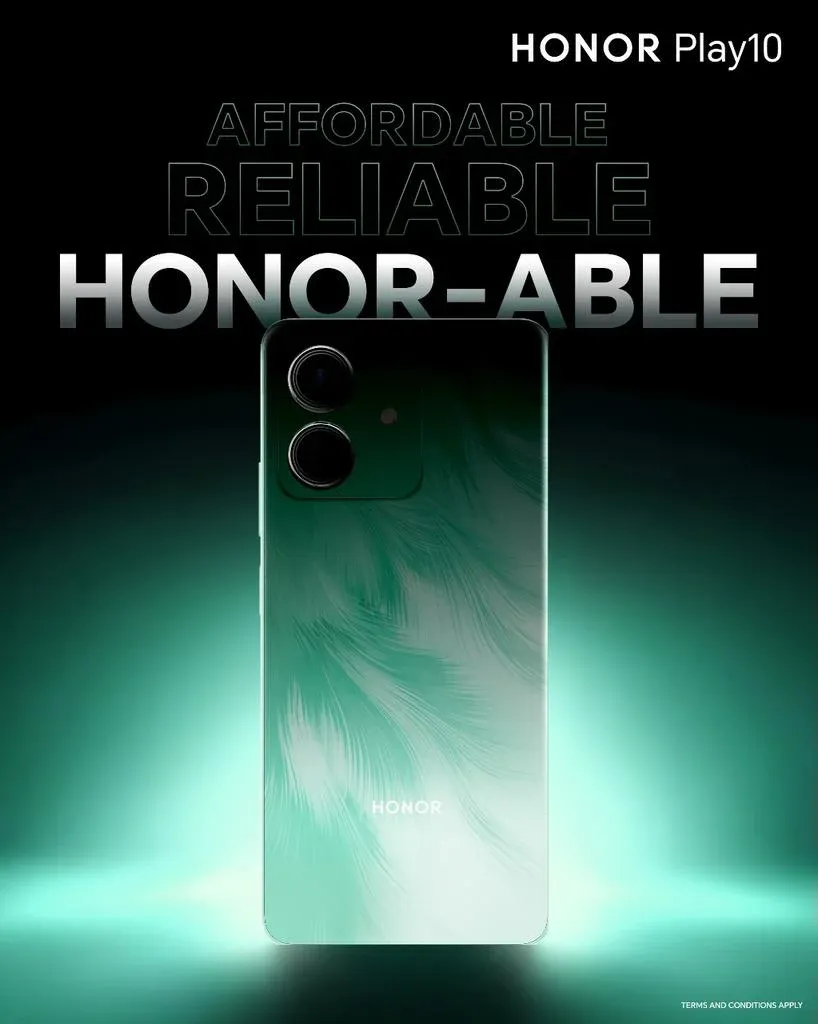
The good news? We already know pretty much everything else about this phone.
What’s Inside: The Helio G81 Chip
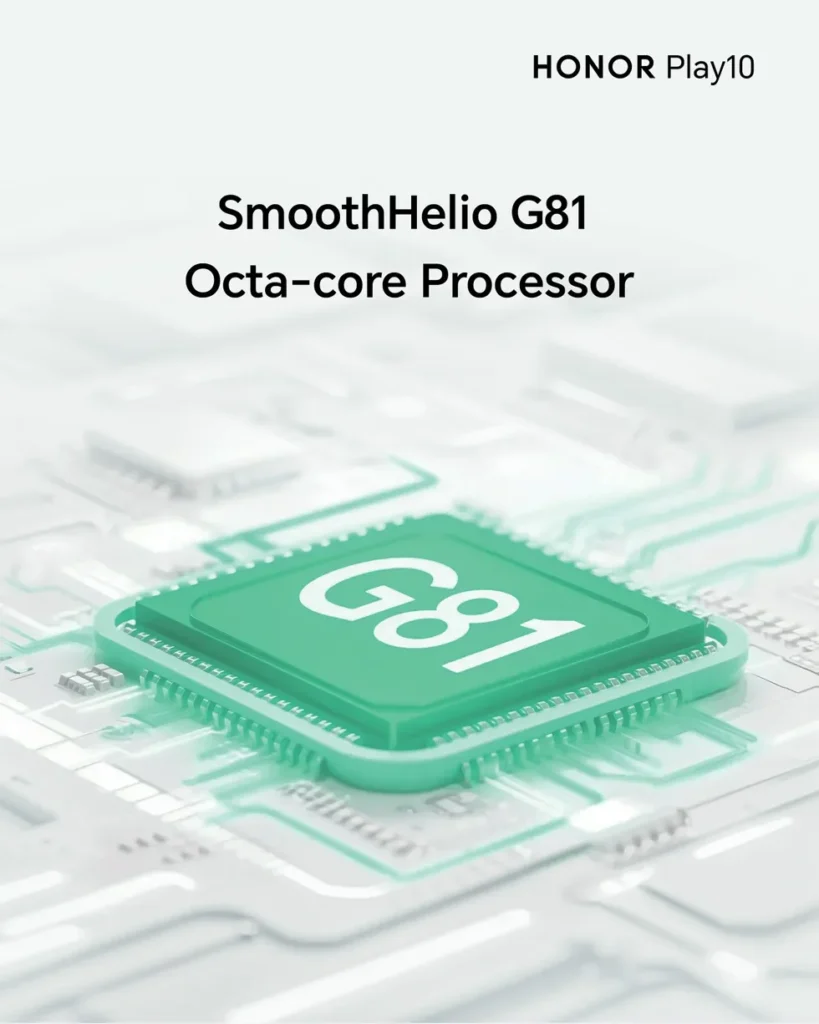
The Play 10 runs on MediaTek’s Helio G81. You’ve probably seen this chip in other cheap phones. It’s built on 6nm technology, which sounds fancy but really just means it’s reasonably efficient for basic stuff.
What can it actually do? Messages, calls, scrolling through Facebook or Instagram, watching YouTube—all fine. Open too many apps at once or try running something demanding? That’s where things get dicey.

The base model comes with 3GB of RAM. That’s… not much. Apps close themselves in the background constantly because there’s not enough memory to keep them running. Switch from Chrome to WhatsApp to Instagram and back to Chrome? Your browser tabs probably reloaded. With 3GB, the phone’s always playing catch-up, deciding what to keep in memory and what to dump.
Storage is 64GB out of the box. After the operating system takes its cut and Honor loads their apps, you’ve got maybe 50GB to work with. Download a few games, let WhatsApp accumulate photos and videos, add your music and camera roll—you’ll hit the limit faster than expected. Hopefully there’s a microSD slot, though Honor hasn’t confirmed that yet.
Why Android Go?
Here’s something interesting: this phone doesn’t run regular Android 15. It runs Android 15 Go Edition instead.
What’s the difference? Regular Android needs decent hardware to run properly. Put standard Android 15 on a phone with 3GB RAM and a Helio G81, and you’re asking for trouble. Everything lags. Apps take forever to open. The whole experience becomes frustrating.
Android Go fixes this by stripping Android down to its essentials. It’s lighter, uses less RAM, eats less storage. Google also makes “Go” versions of their apps—Gmail Go, Maps Go, YouTube Go. These lite apps give you most of the functionality while using way less resources.
The downside? You lose features. Some customization options disappear. Certain Google services aren’t available. Some regular Android apps might not work properly or at all. But the tradeoff makes sense: better to have a phone that actually works smoothly with fewer features than a stuttering mess with everything.
That Big Screen (With Compromises)
Honor stuck a 6.74-inch display on the front. That’s genuinely large—great for watching stuff, reading, gaming. The design looks decent too: slim bezels, a tiny water drop notch at the top. Modern enough at first glance.
Then you look closer at the specs.
It’s a TFT LCD panel. Not IPS LCD. Definitely not AMOLED. TFT is literally the cheapest display technology manufacturers can use. What does that mean for you?
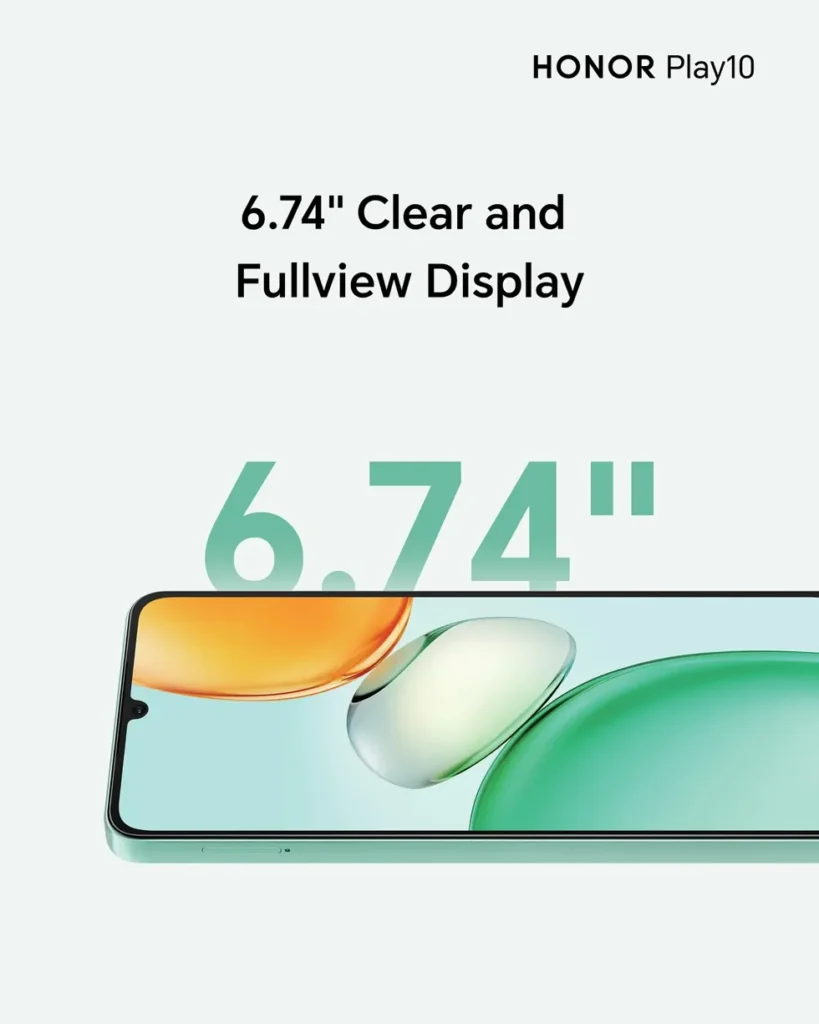
Colors look off. Reds aren’t quite red. Blues lack punch. Whites have weird tints. Nothing looks terrible, exactly, but nothing looks great either. Watch a colorful movie and you’ll notice how much less vibrant everything appears compared to better screens.
Viewing angles are worse. Look at the screen straight on? Fine. Tilt it even a little? Brightness tanks, colors fade, the whole image washes out. Show someone else something on your phone and you both need to huddle around it at just the right angle.
The resolution is 720p HD+. On a 6.74-inch screen, that’s stretched pretty thin. Pixels become visible. Text isn’t as sharp. Photos and videos lack crispness. It’s usable—plenty of people won’t care—but it’s noticeably worse than the Full HD screens most phones have now, even cheap ones.
And it’s stuck at 60Hz. No high refresh rate here. Most phones, including budget models, offer 90Hz or 120Hz now. Those higher refresh rates make scrolling and animations feel smoother, more fluid. At 60Hz, everything feels slightly clunkier once you’ve experienced better.
Camera Situation
The back has a 13MP main camera. For an ultra-budget phone, that’s actually okay. It shoots 1080p video at 30fps, which is pretty standard. Photos in daylight? Decent enough for Instagram or WhatsApp. Nothing impressive, but functional.
Where it falls apart: any challenging lighting. Indoors with overhead lights? Quality drops noticeably. Evening or nighttime? Forget it. The photos get noisy, muddy, lacking detail. There’s probably no night mode worth mentioning, no computational photography tricks to save you.
The front camera is 5MP hiding in that water drop notch. That’s bare minimum territory. Video calls work fine. Selfies in good light are passable. Anything less than ideal conditions and you’re getting grainy, soft images that look like they’re from 2015.
Honor mentions “AI Camera” in their marketing. Translation: basic scene detection. The phone tries to figure out if you’re shooting food, a landscape, or a person, then tweaks settings automatically. Sometimes it helps. Sometimes it makes things worse. It’s not actual AI in any meaningful sense.
Build and Protection
IP52 rating. Let’s decode that. The “5” means some dust protection—not dust-proof, but resistant. The “2” means protection against water drips at a 15-degree angle.
Practically speaking? Light rain won’t kill it. Small splashes are fine. But don’t get ambitious. No using it in the shower. Don’t drop it in water. Heavy rain is risky. This is minimal protection—better than nothing, worse than the IP64 or IP67 ratings common on slightly pricier phones.
The phone is 8.55mm thick. That’s chunky. Most modern phones aim for under 8mm. You’ll feel that extra thickness in your hand and pocket. Probably due to the battery size and cost-cutting in how they arranged the internals.
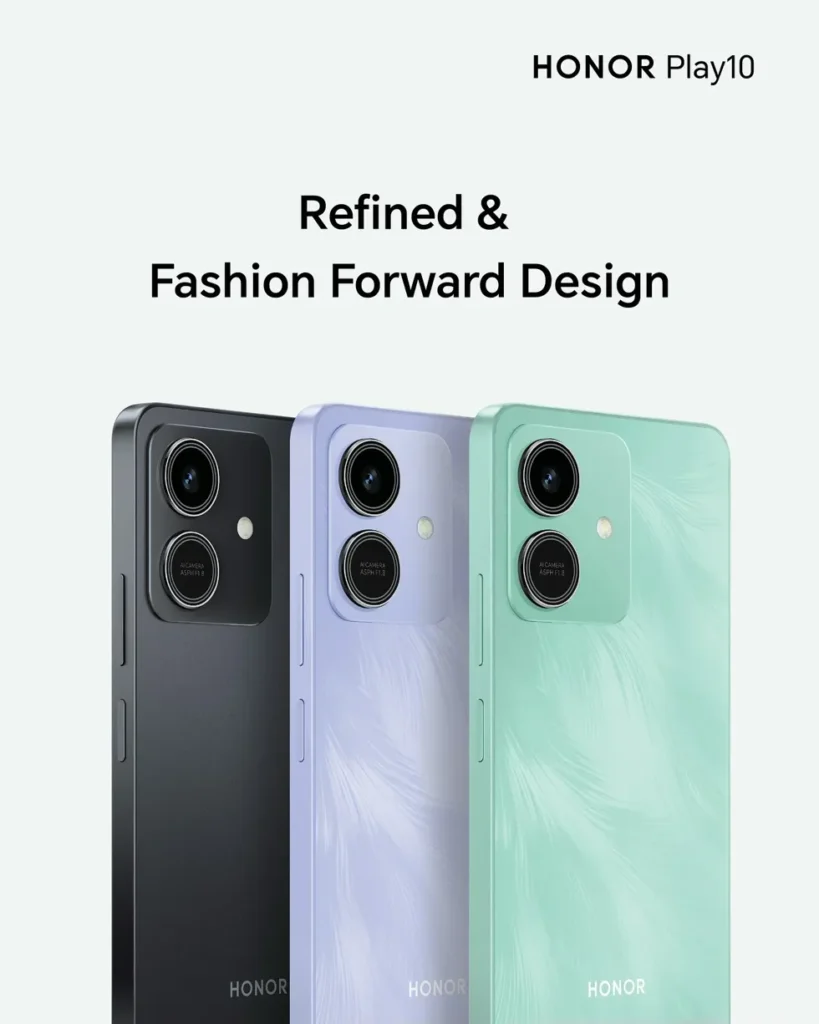
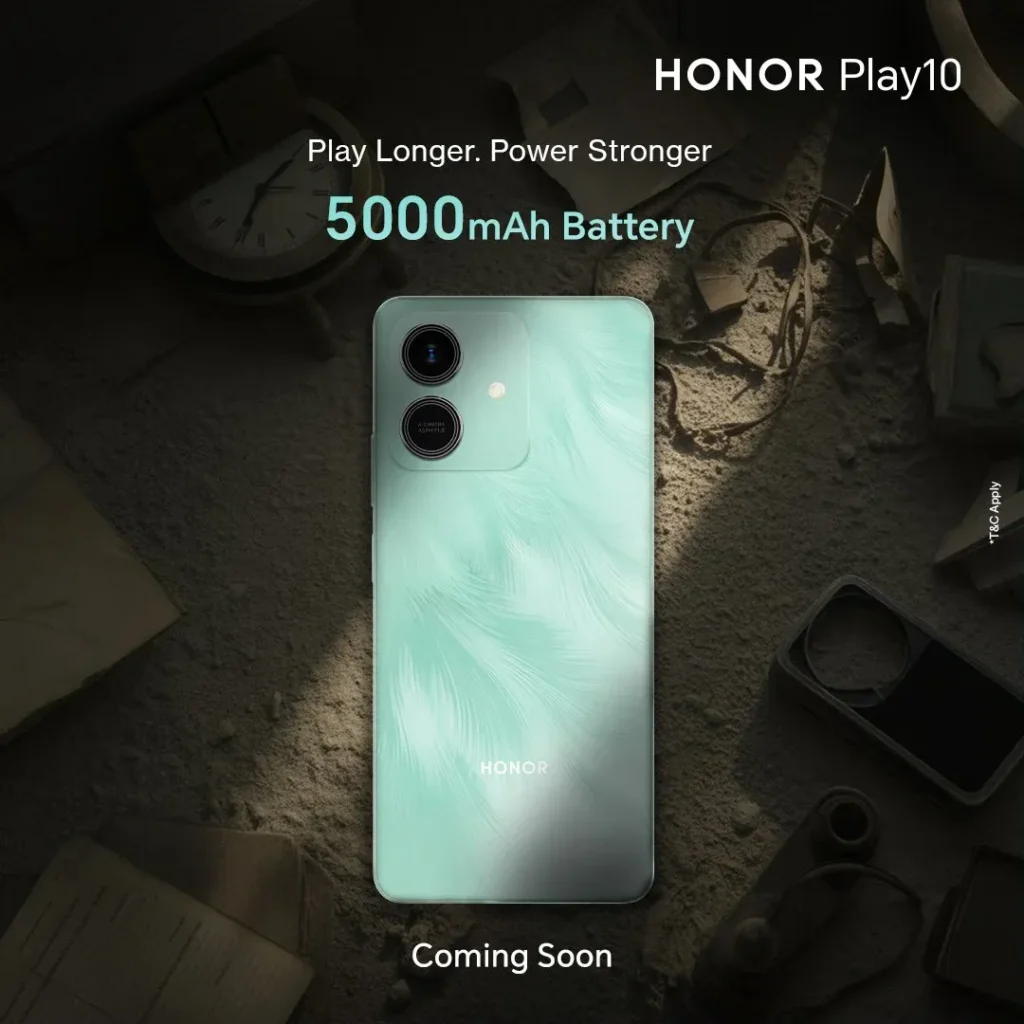
Honor’s teasing an Ocean Cyan color—looks like a blue-green shade. There’ll definitely be more options. Black’s guaranteed. Maybe white or another bright color. Budget phones usually come in 2-4 colors.
Battery Life (But Slow Charging)
5000mAh battery. That’s standard now for budget phones. Given what else is in this phone—the efficient chip, lower-resolution display, 60Hz refresh rate—battery life should be solid. Moderate use easily gets you through a full day. Heavy users might squeeze out a day and a half. Light users could potentially hit two days.
Charging is where Honor really cheaped out. 10W. That’s painfully slow.
How slow? Fully charging 5000mAh at 10W takes 3-4 hours. Maybe longer. A quick 30-minute charge gives you maybe 15-20% battery. You basically need to charge overnight or plan way ahead. Most phones today offer at least 18W, often 33W or higher. 10W feels stuck in 2018.

There’s a USB Type-C port, which is good. No fumbling with which way to plug it in. It supports OTG, so you can connect USB drives, keyboards, whatever through an adapter. Reverse charging is included too—use your phone to charge other devices. But at 10W output, it’ll charge them incredibly slowly.
Connectivity Bits
WiFi supports both 2.4GHz and 5GHz bands. The 5GHz band is faster and less congested, so that’s a nice touch for a phone this cheap. Most ultra-budget devices only do 2.4GHz.
No 5G though. Just LTE. For Pakistan right now, that doesn’t matter much. 5G coverage is limited and expensive. LTE handles streaming, browsing, social media perfectly fine.
Single speaker. Not stereo. Usually fires from the bottom, gets muffled easily when you’re holding the phone. Volume and clarity are basic. Anything serious requires headphones.
USB-C port uses USB 2.0 standards instead of the newer 3.0 or 3.1. Means slower file transfers to a computer. Most people won’t notice since everyone uses cloud storage and messaging apps anyway.
Unlocking Your Phone
Side-mounted fingerprint sensor, probably built into the power button. These are fast and convenient—your thumb lands on it naturally when picking up the phone. They work better than the in-screen sensors on expensive phones, honestly. Quick, reliable, accurate.
No mention of face unlock. Might be there using the front camera, might not be. Honor didn’t say.
What’ll It Cost?
No official Pakistan price yet. But looking at the specs—3GB RAM, 64GB storage, HD+ screen, entry-level chip—this targets the absolute bottom of the market.
Educated guess? Somewhere between PKR 18,000 and PKR 24,000. Any higher and it loses to Infinix, Tecno, or Xiaomi’s Redmi phones offering better specs at similar prices. The actual price determines whether this makes sense or if competitors crush it on value.
Who’s This For?
First-time smartphone buyers. People on extremely tight budgets. Maybe a backup phone. That’s the target audience.
It covers basics: big screen, all-day battery, working camera, modern software. But it compromises everywhere to hit that rock-bottom price.
The 3GB RAM and 64GB storage feel cramped quickly. The 720p TFT screen lacks quality. That 10W charging requires serious patience. Performance handles messages and Facebook but not much beyond that.
This works if your phone use is limited to WhatsApp, calls, Facebook, and occasional photos. Anything more demanding and you’ll feel the limitations constantly. Once Honor drops the actual price, we’ll know if these compromises create real value or if better options exist at the same cost.