


Vivo just teased the V60 Lite 5G for Pakistan, but turns out they’re slipping in the 4G model too—caught everyone off guard. Pre-orders start right now, October 15, 2025, and they’ll land in stores by the 21st. These two share almost everything except the guts for processing and networks. Break it down: same shell, same cameras, but one edges ahead if you care about speed or future tech. Here’s the full scoop on differences first, then what ties them together, explained straight without shortcuts.


Chips and How They Run
4G version packs Snapdragon 685 from Qualcomm—launched back in 2023, so not fresh but gets basic jobs done. Built on 6nm tech, which keeps power use low for longer battery stretches. Cores split into four high-power Cortex-A73 clocking up to 2.8 gigahertz—handles quick bursts like opening apps or scrolling feeds—and four efficient A53 at 1.9 gigahertz for background stuff. GPU’s Adreno 610, entry stuff that renders simple graphics fine, like 2D games or video playback, but heats up or lags on 3D heavy hitters. Overall, it’s okay for daily drivers—emails, chats, light multitasking—but at this price tag, it feels skimpy if you’re into gaming or editing.

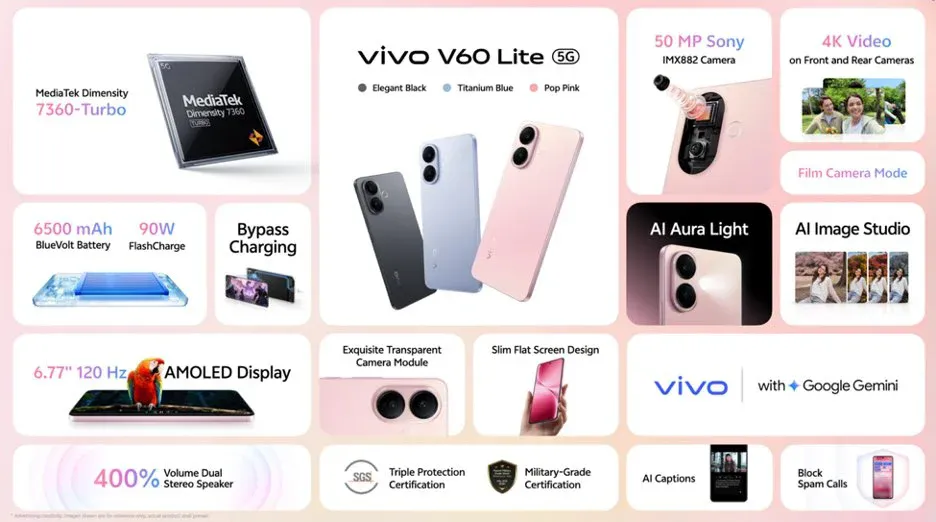
5G model swaps to MediaTek’s Dimensity 7360 Turbo, newer drop from 2025 on the same 6nm node but optimized tighter for efficiency. Eight cores here: two prime A78 at 2.5 gigahertz for tough tasks, six A55 for lighter loads, balancing speed without draining fast. Mali-G615 MC2 GPU steps up graphics—smoother in demanding apps, less stutter in games like shooters or racers. Big win? Built-in 5G support means when Pakistan rolls it out wider (still spotty, mostly urban tests now), you’ll hit faster speeds—downloads fly, videos buffer less. If you’re pushing the phone hard, this one’s the pick; feels snappier overall.
RAM, Storage, and Extras
4G sticks to 8 gigabytes LPDDR4X RAM—decent for juggling a few apps without reloads, like browser tabs or social switches. Storage at 256 gigabytes uses UFS 2.2, clocking reads around 500-600 megabytes per second—quicker than ancient eMMC in super-cheap phones, but you’ll wait a beat on big transfers, like moving videos or installing chunky games.
5G bumps to 12 gigabytes same-type RAM, extra breathing room for RAM-gobblers—think heavy browsers or apps that load models, won’t kill background processes as quick. 256 gigabytes storage upgrades to UFS 3.1, pushing over 1,000 megabytes per second; apps boot faster, files copy in a flash, whole device zips more. Also throws in WiFi 6 (faster in crowded spots, up to 9.6 gigs per second ideal), Bluetooth 5.4 (saves battery on connected gear like watches), and HDR10+ for videos—brighter peaks, richer contrasts on supported streams, no flat look.
Software Side
Both boot Android 15 with Vivo’s FunTouch OS 15 overlay. Android 15 packs smarter privacy, like auto-locking unused apps or selective sharing in calls. FunTouch tweaks it Vivo-style: gesture shortcuts, battery savers, even game modes that quiet notifications. Expect two years of big updates, security fixes rolling in—keeps it secure, adds perks without ditching the phone soon.
Cameras All Around
Rear setup identical: 50-megapixel main lens pulls sharp details in bright conditions, software helps in shadows but no OIS, so videos wobble if you move, photos blur on shaky holds. 8-megapixel ultrawide crams wider views—landscapes stretch out, groups fit without cropping—but corners warp, low light grains up.
Selfie? 32-megapixel front on each—captures clear skins, balanced tones in even rooms; auto-software blurs backs, tweaks lighting, but struggles in dark without help.

Screen Specs
Same display across: 6.77-inch AMOLED, 1080 by 2400 pixels—texts crisp, no jagged edges on icons. 120-hertz refresh makes swipes fluid, animations pop over slower 60-hertz screens. Even bezels frame it neat, tiny punch-hole hides the selfie cam without eating space. AMOLED means inky blacks, vibrant hues; brightness holds up outside, no major squint.
Power and Toughness
6500 milliamp-hour battery shared—monster size, two days on mixed use like streaming an hour, constant messages, some navigation. Light day? Three easy. 90-watt charging fills it under 60 minutes from flat—Vivo’s adapter included, but mind the warmth buildup.
Builds match: IP65 keeps dust out, shrugs off splashes or light rain (not dives). Military cert (810H) tests drops from 1.5 meters onto concrete—survives pocket slips or table tumbles. Plastic probably, but sturdy feel.
Sound and Locks
Dual speakers belt stereo—volume fills a room, some bass without distortion. Under-screen fingerprint—scans quick if dry, slows on sweat.
Costs in Pakistan
5G (12/256GB) at 94,999 rupees—extra for the muscle and future nets.
4G (8/256GB) cheaper at 76,999 rupees—solid if 5G’s no rush. Only these configs; no mix-and-match.