


Sometimes I get the impression that the gaming world has turned back to the past. Despite the rapid development of technology, interest in retro consoles continues to grow. People are eagerly returning to the consoles of the 80s and 90s, and even modern companies are starting to release updated versions of old devices. To me, this looks less like a fashion trend and more like a natural desire to preserve a culture that shaped an entire generation of players. And the more I look at this phenomenon, the more obvious it becomes: retro consoles have a unique value of their own.
Nostalgia and cultural heritage

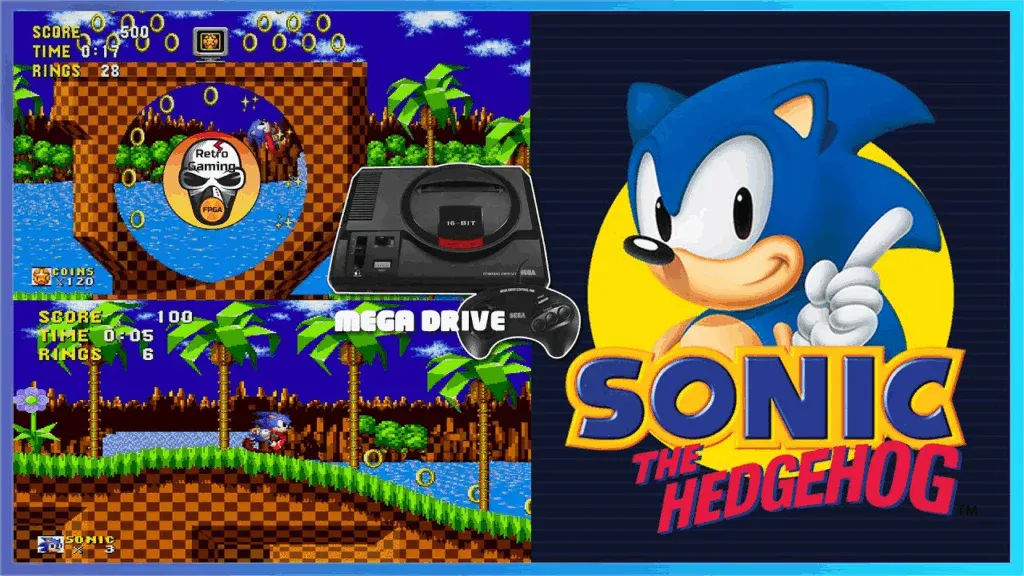
One of the main reasons for the popularity of old consoles is nostalgia. Games like Super Mario Bros, Sonic the Hedgehog, or The Legend of Zelda were part of the childhood of millions of people, and everyone has their own memories tied to them: first victories, time spent with friends, the joy of finally completing a level after dozens of attempts. These emotions cannot be replaced by modern projects, no matter how advanced the technology becomes.
Today, many want to recapture that sense of simplicity and joy when a game did not rely on complex graphics but captivated with its mechanics. Even the younger generation, which never experienced the 8-bit era, is discovering these projects and finding in them a unique atmosphere. Nostalgia works not only for those who played twenty years ago but also for those who want to connect with gaming history.
Interestingly, references to the roots of the industry are often found in esports news as well: resources like EGW news cover not only tournaments but also the influence of classic projects on the modern scene. For example, it is often recalled that arcade machines and the first consoles laid the foundation for the competitive spirit we now see in esports.
This shows that retro is not just “old” but an important part of culture that continues to live on. It holds the memory of gaming’s evolution, and that is why retro consoles today are not perceived as outdated hardware but as cultural heritage worthy of preservation and reinterpretation.
Accessibility and re-releases
Modern companies actively support the interest in retro by releasing mini-versions of consoles that quickly become collector’s hits. For example, the NES Classic Edition or PlayStation Classic allow players to enjoy dozens of legendary games without the need to hunt for old hardware and cartridges. This approach is convenient for those who want to quickly return to the past without the technical difficulties of setting up vintage consoles.
In addition, digital platforms like Nintendo Switch Online or PlayStation Plus offer entire libraries of classics where you can easily launch Metroid, Donkey Kong, or even Star Fox. Games become part of the modern ecosystem, downloadable in just a few clicks and playable on current devices. This opens the door for a new generation of gamers: teenagers and younger players can experience the projects that once defined the industry.
What’s especially valuable is that re-releases are often accompanied by extra features: cloud saves, updated interfaces, or improved graphics. Yet the spirit of the original remains — the same levels, music, and atmosphere fans remember. In this way, retro games become a bridge between the past and the present, proving that older projects can still feel relevant even decades later.
Unique gameplay philosophy
Retro projects are valuable not only for their atmosphere but also for their distinct approach to gameplay. The limited technical capabilities of the 80s and 90s forced developers to look for unconventional solutions. They couldn’t impress players with realistic graphics or massive open worlds, so they focused on mechanics that captured attention from the very first minutes.
Take Tetris or Pac-Man as examples: their rules are extremely simple and understandable even to someone who has never played before. Yet behind this simplicity lies a depth that keeps players coming back again and again. Tetris trains spatial thinking and reaction speed, while Pac-Man still remains a symbol of arcade excitement.
I believe that this clarity and straightforwardness are exactly what allow retro games to remain relevant in the age of complex open-world projects like The Witcher 3 or Elden Ring. Sometimes players just want a break from dozens of quests and systems, returning instead to a simple but well-crafted gameplay loop.
This is where the uniqueness of retro game philosophy lies: they prove that engagement doesn’t always depend on budget or graphics, but is born from thoughtful game design that stands the test of time.
Collecting and community

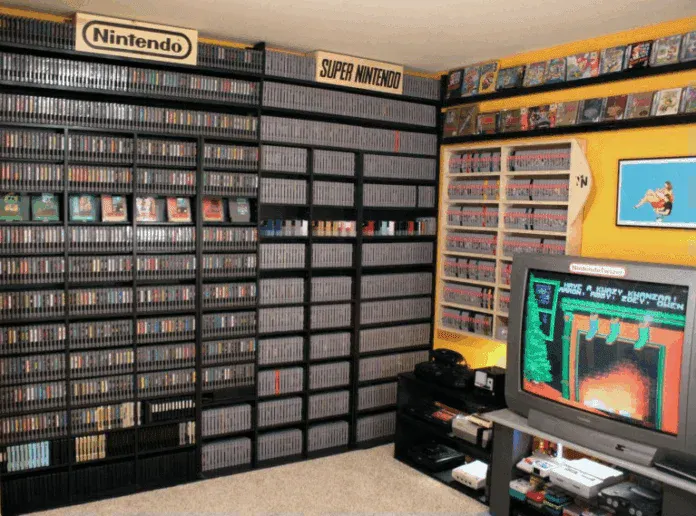
It’s important not to forget that an active and passionate community has formed around retro consoles. For some players, it’s about hunting down rare cartridges and limited editions; for others, it’s about restoring old consoles and modifying them. Entire forums and online groups exist where people share their finds, exchange repair tips, and tell stories about discovering a long-awaited game at a flea market or in a vintage store.
In Japan, second-hand game shops remain popular to this day: there you can find original Famicom boxes or unique editions of Final Fantasy. In the West, retro gaming festivals are regularly held, bringing together collectors, fans, and even developers. At events like RetroGameCon or the Portland Retro Gaming Expo, visitors can see and try dozens of classic consoles.
For many, this is more than just a hobby — it’s a way to preserve history and pass it on to others. Retro gaming has become part of cultural memory: it unites generations of players, lets children discover what their parents once played, and reminds adults of how it all began. And it’s precisely thanks to these communities that old consoles continue to live on, with their value only increasing over time.
Conclusion
For me, it is clear that the return of retro consoles is not a temporary trend but a natural process. People are looking for emotions that modern projects sometimes lack, and they value simplicity that has stood the test of time. There is a certain honesty and straightforwardness in their gameplay that is rarely found in today’s games, which are often overloaded with mechanics and systems.
This means that old consoles do have a future: they continue to remind us of where it all began and show that the true value of games lies in their ideas, not just in graphics or technology. Moreover, retro helps us understand how the gaming industry has evolved and why some concepts remain relevant for decades.