

A trillion words a month. Sit with that for a second. That’s what Google Translate is processing right now, every month, across a billion users and 250 languages. It launched in 2006 as a side project that couldn’t even handle basic idioms without producing something embarrassing. Now it covers 95% of the world’s population and the single most translated phrase across all of it is “thank you.”
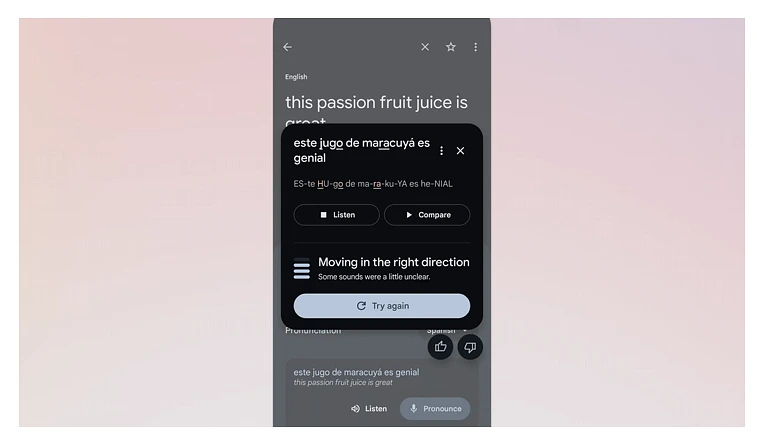
Anyway — 20 years in, Google is finally adding pronunciation practice, which is the feature people have been asking for probably since year two. The gap was always obvious: translation tells you the words, but it never told you how to actually say them out loud without sounding like you’re reading off a cue card.
The new feature listens to you speak, runs it through AI, and comes back with specific feedback on what’s wrong. Not just a green checkmark or a red X — actual notes on what to fix. Rolling out now on Android in the US and India, English, Spanish, and Hindi first.
Google says people who use the Practice mode weekly are coming back for the interactive scenarios — real-world conversation stuff, not just isolated vocabulary drills. Which makes sense. Most people don’t need help translating a menu. They need to not freeze up when someone responds to them.
The most popular language pair is English to Spanish, which tracks. The most translated phrase is “thank you,” which is either wholesome or says something about how most people are using this thing. Probably both.