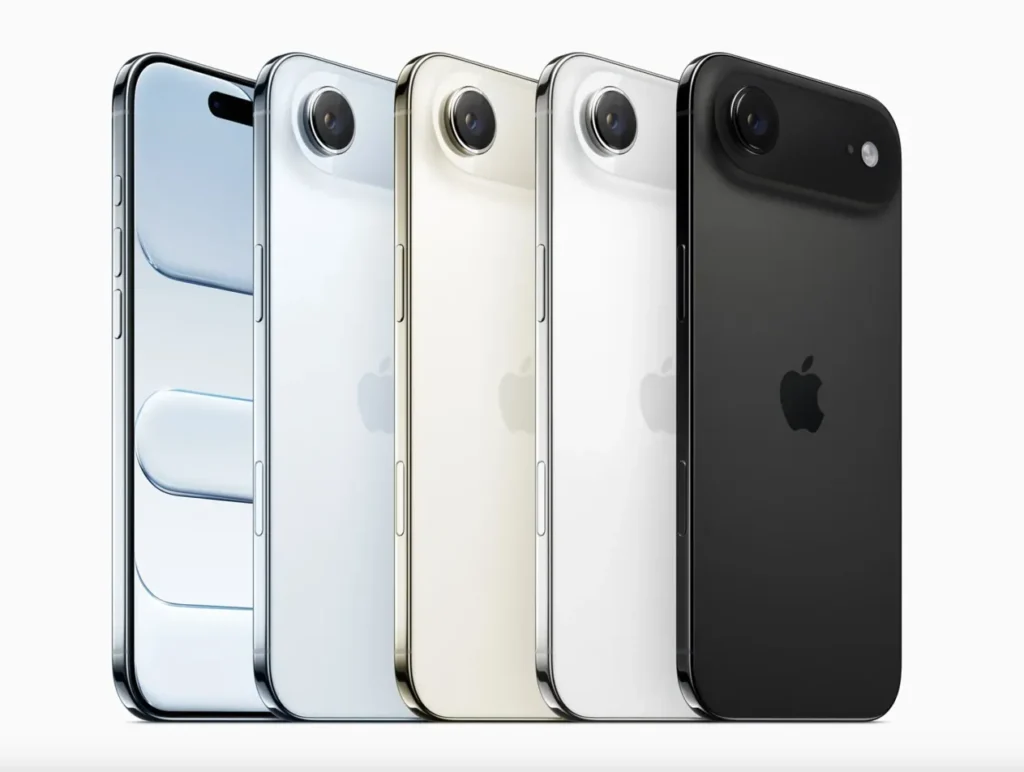


Apple launched the iPhone 17 Pro and iPhone 17 Pro Max during their event on September 9, 2025. These phones throw the standard template for a loop, bringing a fresh unibody look that fuses toughness with style.. They come with a flat horizontal camera bar across the back, and after a long wait, both pack a sharp 48MP telephoto lens. If you’re eyeing an upgrade, here’s the full rundown on what these models bring to the table, including some extras that make them stand out from last year’s bunch.


Tough Aluminum Shell with a New Twist
These two phones share most of their DNA, but the Pro Max stretches things out with a larger screen and a bit more battery room. Apple went back to basics here by rebuilding the whole frame from Series 7000 aluminum, the kind that’s strong but not too heavy. The outside gets an anodized finish before they slap on colors like Refined Silver, Deep Blue, and that eye-catching Cosmic Orange. The metal wraps all the way around the sides, screen edges, and even hugs the camera setup, leaving just a small strip of Ceramic Shield glass on the back under the camera bar. This setup cuts down on cracks if you drop it, and it keeps the phone feeling solid without adding bulk. Compared to older models with more glass, this aluminum body shrugs off everyday bumps better and helps with heat spread during heavy use. They kept the buttons simple—volume rockers, action button, and a power key that doubles as a fingerprint spot if you set it up that way. Water and dust resistance sticks at IP68, so no worries about splashes or dirt.


One cool addition is how the design opens up space inside for better airflow. That means less throttling when you’re gaming or editing videos for long stretches. If you’ve had phones that get hot and slow down, this fixes a lot of that hassle.
48MP Across the Board and Smarter Selfies
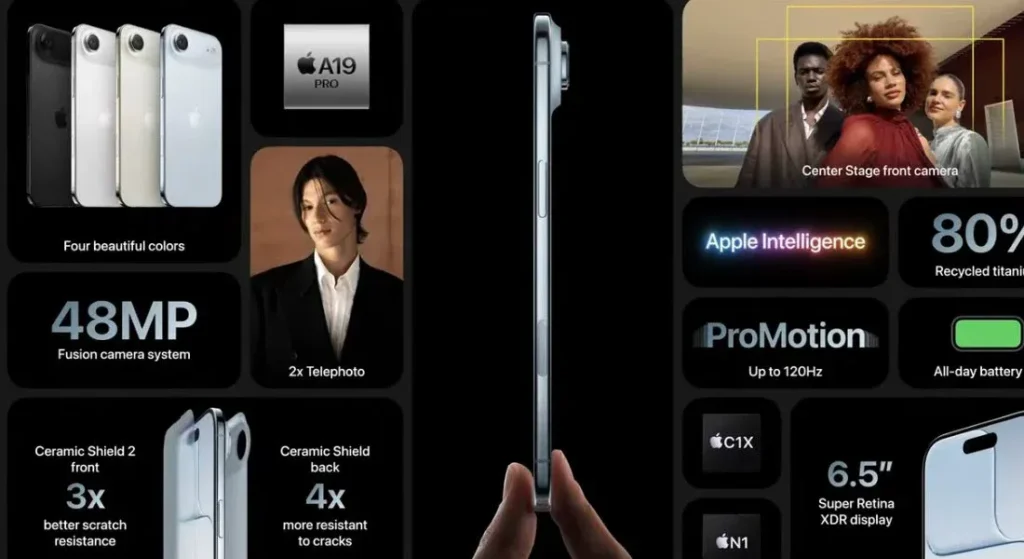
The cameras steal the show here, starting with that new 48MP telephoto lens on both models. Apple dialed back the optical zoom to 4x (that’s about 100mm equivalent) from the 5x on the iPhone 16 Pro, but the higher megapixel count lets you push digital zoom up to 8x without turning shots into mush. It handles low light better too, pulling in more details for portraits or far-off subjects. The main camera stays at 48MP for 26mm wide shots, great for everyday snaps, and the ultrawide matches it at 48MP for 13mm views that fit in big landscapes or group pics. All three lenses support 4K video at 120fps for slow-mo, and they throw in pro-level controls like manual focus and exposure if you’re into that.
Up front, the 18MP selfie camera gets Center Stage, which tracks your face and adjusts the frame automatically during calls or recordings. No more awkward repositioning—it just works. Apple added some software tricks too, like better skin tones in mixed lighting and a portrait mode that blurs backgrounds without needing extra steps. If you shoot a lot of content, the horizontal camera bar makes it easier to grip like a mini camcorder, and it reduces shake for steadier videos. One downside: if you’re used to the old zoom range, you might notice the change on super far shots, but the extra resolution makes up for it most times.
A19 Pro Powers Through with Better Cooling
At the heart of these phones is the A19 Pro chip, built on a 3nm process with 6 CPU cores, 6 GPU cores, and a 16-core neural engine that handles all the AI stuff. It runs smoother than the A18 Pro from last year, especially for tasks like editing 4K video or running multiple apps. Lab tests by Apple indicate 40% better sustained performance, courtesy of the larger cooling chamber tucked inside the new design. Which means you can game longer on a single charge, without the phone slowing down or heating up. The neural engine spits out Apple Intelligence features like a more context-aware Siri and auto editing photos to remove distractions, or creating text and/or images on the fly. If privacy concerns, it’s all on-device, so no cloud fear. RAM jumps to 8GB on both so you can multitask more easily and storage starts at 256GB, progressing to 512GB, 1TB or even 2TB on the high end for people who hoard videos and apps. There aren’t benchmarks out yet, but hands-on reports say it’s noticeably faster for heavy loads, such as AR apps and 3D rendering.
Brighter and Smoother for Outdoor Use
The screens keep their sizes—6.3 inches on the Pro and 6.9 inches on the Pro Max—but Apple cranked up the brightness to 3000 nits, almost double what the iPhone 16 Pro hit. These are Super Retina XDR OLED panels with a 1-120Hz refresh rate that adjusts on its own to save battery while keeping scrolls buttery smooth. The big upgrade is the Ceramic Shield 2 coating with seven layers that cuts down glare, making it easier to see in bright sun or under lights. If you’ve squinted at your phone outside, this helps a ton. Always-on display is still there, showing widgets and notifications without waking the whole screen. Touch response feels snappier too, especially for gaming or drawing with the Apple Pencil if you pair it.
Battery and Charging: Longer Life Without Changing Speeds
Apple didn’t spill exact battery sizes, but they promise two extra hours of screen time over the iPhone 16 Pro models, thanks to the efficient A19 chip and that roomier design. The Pro Max gets the edge here with its bigger body fitting more capacity, making it the longest-lasting iPhone yet. Charging sticks to the script: 25W wired, 15W MagSafe wireless, and reverse charging for your AirPods or Watch. No big jumps in speed, but it fills up quick enough for most days. If you’re on the go a lot, the extra runtime means less hunting for outlets, and low-power mode stretches it even further.
Connectivity, Software, and Extras
These phones stuff in Wi-Fi 7 for faster at-home or hotspot downloads, and the modem will be capable of superior 5G in very busy areas. It comes loaded with iOS 19, which introduces features such as a more customizable home screen and deeper A.I. integration to things like summarizing emails or planning routes. Security is enhanced with on-device face ID that is faster in low light. The audio is enhanced by spatial sound that adjusts as you turn your head, and the speakers pump out crisper highs without breaking up. If you are into Apple ecosystem stuff, the handoff to Mac or iPad is better than ever.
One neat extra: the action button now handles more shortcuts, like quick camera access or toggling silent mode. Environmental perks include more recycled materials in the aluminum, and Apple aims for carbon neutral by 2030.
When and How Much
The iPhone 17 Pro starts at $1099 for 256GB, and goes up by between $100 and $200 for each storage bump, ending up at 1TB or 2TB. The Pro Max begins at a higher price of $1199, considering the steps in the pricing. In Pakistan, that’s somewhere around PKR 313,000 for the base Pro, and PKR 342,000 for the Pro Max, but see local haunts for exacts. You can pre-order for $699, with shipping and in-store pick-up available on Sept. 19. Wider rollout to more countries hits by September 26. If you’re trading in an old phone, Apple offers credits that knock down the cost—worth checking their site for deals.


On balance, these Pros feel like a sturdy upgrade if you crave pro cameras and power without the slim iPhone 17 Air’s concessions. If what you’ve got is working, maybe wait for reviews, but for creators or heavy users, the camera and performance jumps make it very tempting. Leave a question if you’d like to compare to other models.