

Vivo launches both phones October 13, 2025 at 7 PM China time (4:30 PM India). China gets them first, other markets later – India probably December. Same event brings Vivo Pad5e tablet, TWS 5 earbuds, and Watch GT 2.
Processor
MediaTek Dimensity 9500 runs both phones (announced October 10). Android 16 with OriginOS 6 on top. Vivo added VS1 and V3+ image processing chips for camera work.
Displays
X300 has a 6.31-inch screen. Smaller size, replaces the old X200 Pro mini even though it dropped “mini” from the name. LTPO AMOLED with 8T tech, 120Hz refresh, 1.5K resolution, HDR10+. Flat panel with razor-thin bezels – Vivo officially compared it to iPhone 16 Pro and claims theirs is slimmer. Uses LIPO tech with BOE’s Q10 Plus panel.
X300 Pro bumps up to 6.78 inches. Same LTPO AMOLED setup, 120Hz, 1.5K. Also flat – Vivo ditched those quad-curved screens finally. Bezels beat the iPhone too according to their marketing.
Build
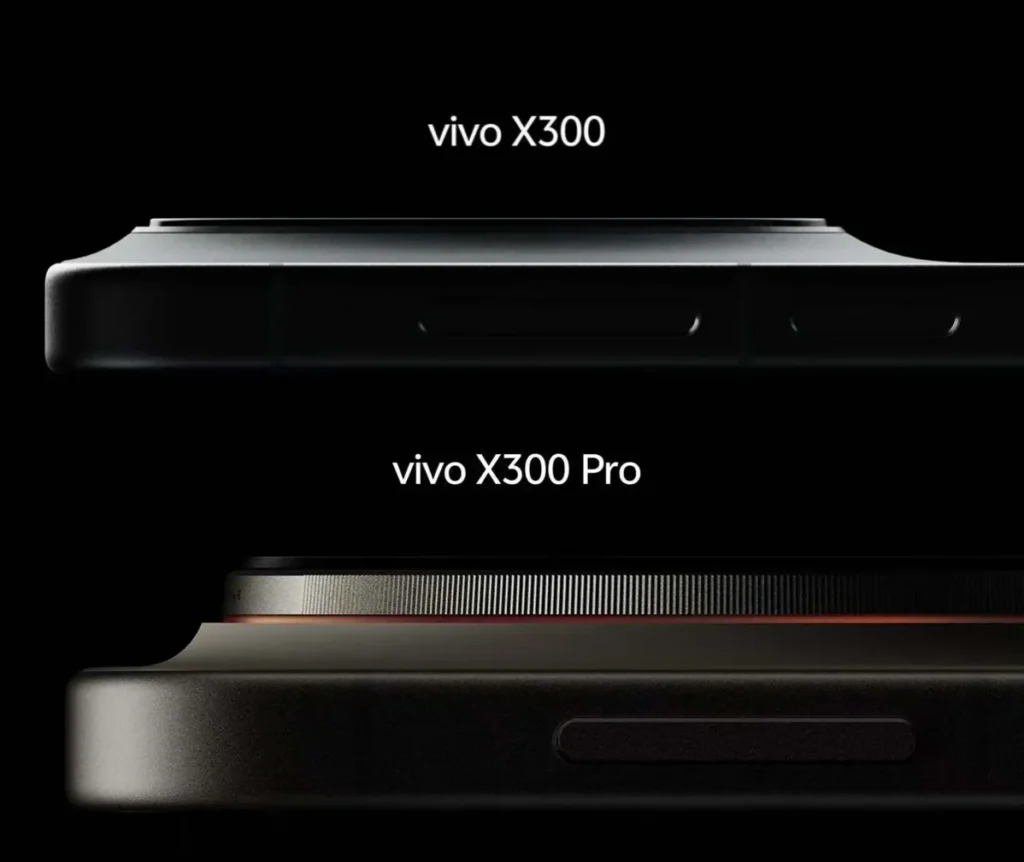
X300 measures 7.95mm thick. Glass back, metal sides with visible antenna bands. Sharp flat edges. MIL-STD-810H military certification.
X300 Pro just 0.04mm thicker at 7.99mm. Same premium materials and mil-spec rating.
X300 Cameras
Main camera uses Samsung’s ISOCELL HPB sensor – 200MP, 1/1.4 inch size, 23mm focal length. Vivo got exclusive customization on this one. ZEISS T* coating, blue glass cuts stray light.
Telephoto gets Sony LYT-602 sensor, also custom. 50MP, 1/2 inch, 70mm reach. ZEISS APO super periscope with 3x optical zoom. Works as telemacro lens too. APO certification means better color accuracy.
Ultra-wide probably uses Samsung JN5 at 50MP but Vivo hasn’t confirmed that officially.
Front camera: 50MP ZEISS with autofocus, 92-degree wide angle. Built for selfies, video calls, vlogging.

X300 Pro Cameras
Main sensor switches to Sony LYT-828 at 50MP. Vivo calls it “gimbal-grade” – first co-customized sensor of this type. 1/1.28 inch, f/1.57 aperture. Built on 22nm low-power process. CIPA 5.5 stabilization, which is one full stop better than the X200’s CIPA 4.5 rating. Hybrid Frame-HDR hits 100dB dynamic range. VCS 3.0 handles color processing.
Here’s where it gets interesting – telephoto jumps to 200MP. Samsung HPB “Thanos” sensor (yeah, they named it that), deeply customized and exclusive to Vivo. 1/1.4 inch, 85mm focal length. ZEISS APO periscope, 3.5x optical zoom. Same CIPA 5.5 stabilization as the main camera – highest rating you can get right now. ZEISS T* coating, fluorite glass elements, full APO certification. Focus tracking engine co-developed with partners. “Blueprint” algorithm sharpens telephoto shots without leaning hard on AI tricks.
Vivo claims four strengths over competitors: stability, speed, clarity, transparency (meaning color accuracy and minimal distortion).
Ultra-wide expected to be Samsung JN5 at 50MP, same as the X300.
Front camera matches X300 – 50MP ZEISS with AF, 92-degree FOV.
Camera Accessories
ZEISS makes a 2.35x telephoto teleconverter that works with both phones. First showed up with X200 Ultra. X300 version comes in silver, X300 Pro gets black. Adds 13-element Kepler optics, extends focal range to 200mm. Works with X300’s 200MP main or X300 Pro’s 200MP telephoto. Supports landscape, snapshot, portrait, professional modes.
Camera grip accessory available for both models. Adds physical dials and buttons, basically turns them into DSLR-style devices. Mounts to the bottom.
Vivo hasn’t said if these come free or cost extra.
Memory
X300 Pro Satellite Edition confirmed with 16GB RAM and 1TB storage – dual UFS 4.1 four-lane setup. Other configurations expected but not announced.
X300 probably goes up to 16GB RAM and 1TB storage too but nothing official yet.
Battery
X300 expected around 6,000-6,500mAh. Leaked info says 90W wired charging, wireless charging likely but not confirmed.
X300 Pro Satellite Edition: 6,510mAh confirmed. Probably 120W wired charging though not official. Some rumors mention 7,000mAh variants.
Colors
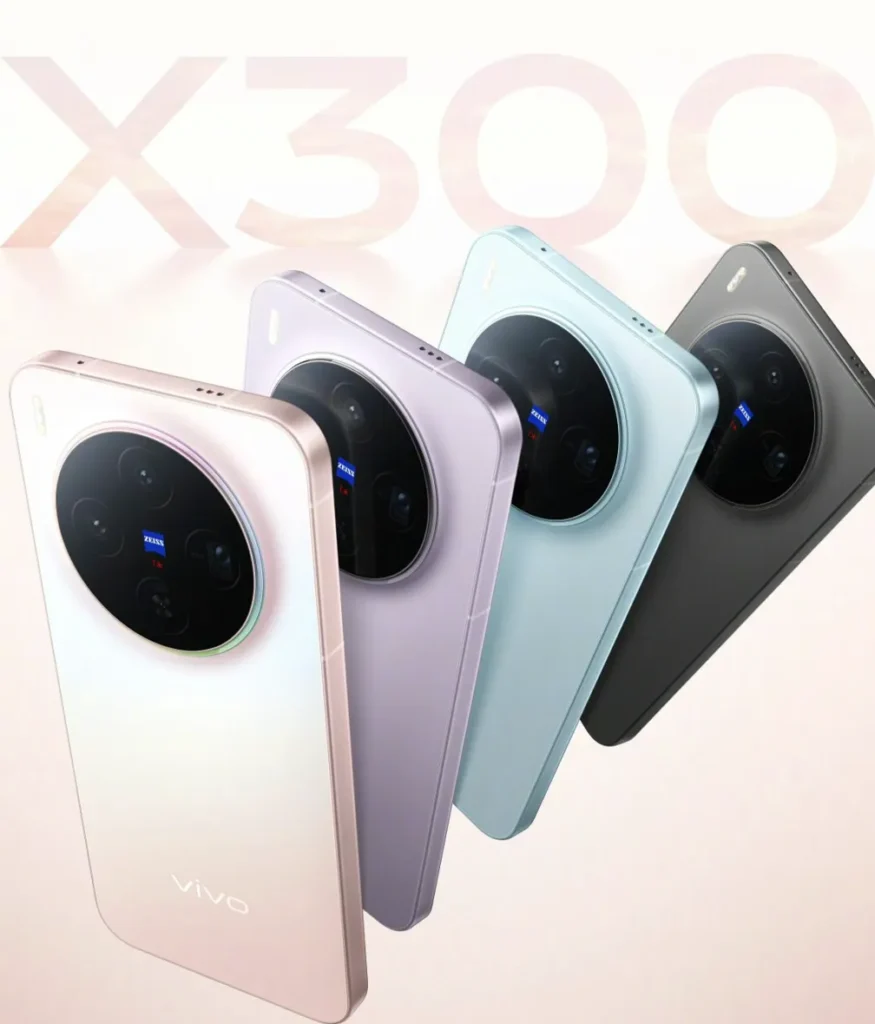
X300 comes in four shades:
- Lucky Color (pastel, nature-inspired)
- Cozy Purple (pastel purple)
- Free Blue
- Pure Black
Velvety glass finish that’s smooth and non-slip.
X300 Pro also four colors but more subdued:
- Wilderness Brown (nature-inspired, less saturated)
- Simple White
- Free Blue
- Pure Black
Natural tones, less vibrant than X300.
Design Details
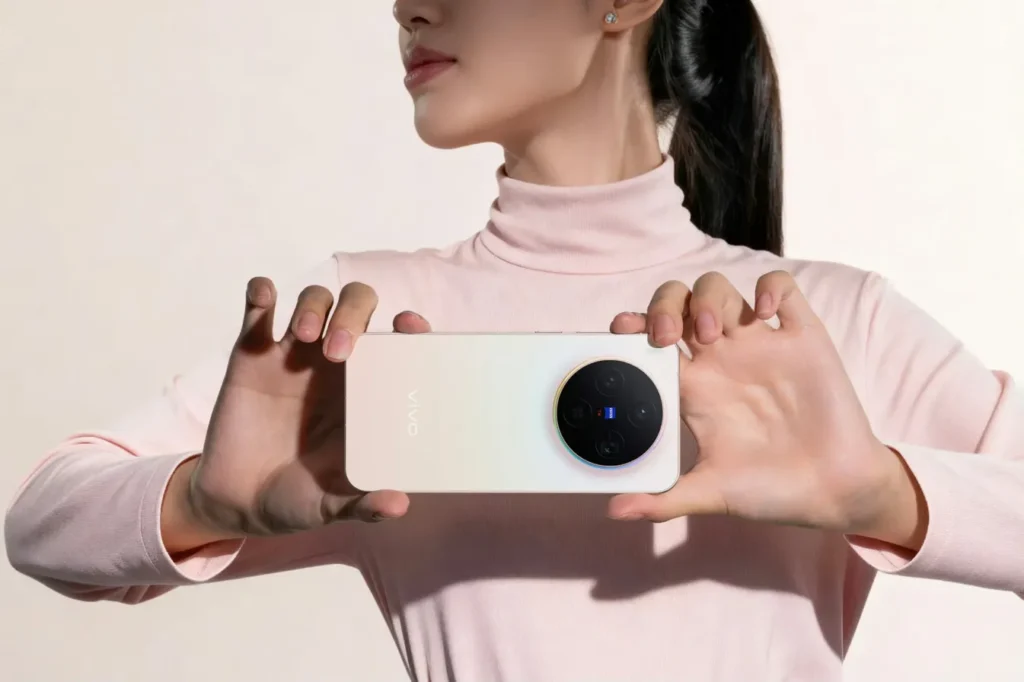
Both phones have circular camera modules with “suspended water droplet” look – cold-sculpted glass. ZEISS logo centered. Large black crater houses the cameras. Smooth despite the protrusion.

Extra Features
Custom Super Sense vibration motor (model 751440) with redesigned structure.
X300 Pro gets Universal Signal Amplifier chip for better reception.
Future AI features teased: AIGC landscape creation, personalized beauty modes.
Pricing Estimates (India)
X300 base (12GB + 256GB): somewhere between ₹64,999-₹69,999 X300 Pro: estimates range from ₹84,999 to ₹99,999
Nothing official, prices vary wildly across sources.
What Changed from X200
Displays went completely flat – no more quad-curved panels. Bezels got slimmer using LIPO tech.
Cameras saw major upgrades. X300 jumped from basic telephoto to 50MP LYT-602 periscope. X300 Pro added that 200MP telephoto monster. Both got 50MP selfie cameras with autofocus – huge improvement over X200’s weak front cameras. Stabilization improved from CIPA 4.5 to 5.5.
Processor upgraded to Dimensity 9500 from 9400. Dual-chip imaging added (VS1 + V3+).
ZEISS teleconverter now works with non-Ultra models.
The Differences
X300: Compact at 6.31 inches, 200MP main camera (HPB), 50MP periscope telephoto (LYT-602), thinner at 7.95mm, vibrant colors.

X300 Pro: Larger 6.78-inch screen, gimbal-grade 50MP main (LYT-828), 200MP periscope telephoto (HPB “Thanos”), industry-best CIPA 5.5 stabilization, bigger 6,510mAh battery, natural colors.
Both phones push hard on camera specs with ZEISS partnership, pro accessories, and MediaTek’s latest flagship chip.