


After all those leaks dragging on for months, Poco finally dropped the C85 on the global scene right around early September 2025. It’s their cheapest phone yet, aimed at folks who want something basic without breaking the bank, and yeah, it’s pretty much a twin to the Redmi 15C that came out a month before – same guts under the hood, just different colors and branding. If you’re after a big screen for scrolling or videos, plus a battery that lasts forever, this one’s got you covered. It skips 5G to keep costs down, sticking to 4G, but packs enough punch for everyday stuff like calls, apps, and light games. Think of it as an entry-level pick for students or anyone pinching pennies, starting at just over a hundred bucks. Here’s the full rundown, updated with the real deal from the launch.
Display and Battery Life
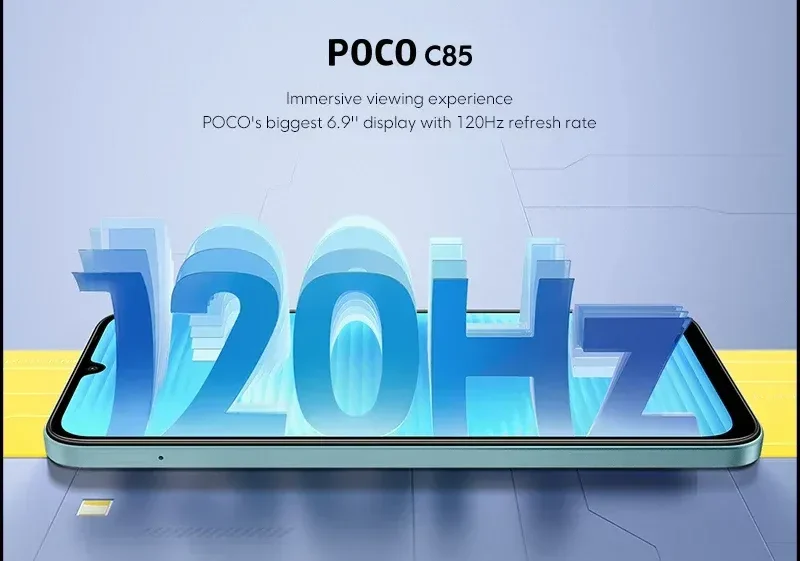
Phones this cheap often skimp on the screen, but the Poco C85 steps up with a huge 6.9-inch IPS panel that’s great for binge-watching or gaming on the go. It hits 720p resolution – nothing fancy like full HD, but sharp enough for most things without draining power too fast. The refresh rate cranks up to 120Hz with what they call AdaptiveSync, so it switches between 60Hz for reading, 90Hz for scrolling, and full 120Hz for smoother action in games or feeds. Brightness tops out at 810 nits, which means you can see it okay outside even in bright sun, though it’s not the best for super harsh light. Plus, it got a TÜV Rheinland nod for eye safety, cutting down on blue light to ease strain during long sessions.

On the battery side, it’s a beast with 6000mAh packed in, lasting up to 22 hours of video playback, 82 hours of music, or 20 hours of reading on a single charge – perfect if you’re out all day. It supports 33W fast charging, hitting 50% in about 31 minutes, and even does reverse charging at 10W, so you can juice up your earbuds or another phone like a mini power bank. Tests show it holds up well over time, keeping at least 80% capacity after 1000 charges, so it won’t die on you quick. If you’re coming from an older phone with smaller batteries, this feels like a big upgrade for marathon use without constant plugs.
Camera Setup
The cameras here aren’t going to wow photographers, but they handle basics without fuss. On the back, you get a 50MP main sensor that grabs decent shots with good color in daylight – think clear pics of food or friends, though it struggles a bit in low light without much help from AI tricks or stabilization. There’s a tiny QVGA helper lens for depth stuff, but it’s mostly there for show. Up front, an 8MP selfie cam sits in a small waterdrop notch, fine for video calls or quick snaps with some beauty modes to smooth things out. Both sides shoot 1080p video at 30fps, nothing 4K or fancy, but steady enough for social media clips.

From early reviews, folks say the main cam does okay for the price – vibrant colors pop, and portraits come out natural without overdoing the blur. No advanced editing built-in like on pricier models, so you’ll edit elsewhere if needed. If you’re big on photos, this isn’t your pro tool, but for casual use like sharing on X or Instagram, it gets the job done without embarrassing you.
Performance and Software
Powering everything is the MediaTek Helio G81-Ultra chip, clocked up to 2.0GHz, which is solid for an entry-level phone – handles daily tasks like browsing, emails, and social apps without hiccups. It comes in two setups: 6GB RAM with 128GB storage or 8GB RAM with 256GB, and you can expand storage up to 1TB via microSD if you fill it up with photos or downloads. They added memory extension too, bumping effective RAM up to 16GB on the higher model by borrowing from storage, which helps with juggling apps.
It runs Android 15 out of the box with HyperOS 2 on top – that’s Xiaomi’s skin, bringing stuff like better device syncing if you have other Xiaomi gear, shared clipboards, or call handoffs. Performance is passable; multitasking works fine on the 8GB version, but the original article was right that it’s not silky smooth for heavy stuff. Reviews mention it runs light games like Mobile Legends at high settings with a solid 98% performance score and minimal lag, but push it to intense titles and you’ll see frame drops or heat. Geekbench scores clock in around 408 single-core, 1364 multi-core for CPU, and 976 for GPU – entry-level numbers, but enough for most folks. One downside: it ships with some bloatware eating up nearly 30GB of space right away, so clear that out quick if storage matters.
Design and Build Quality
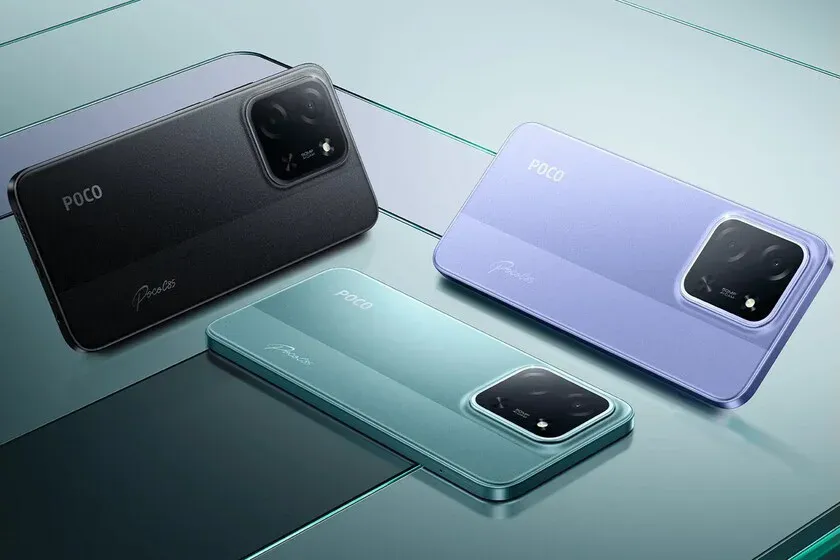
Poco kept the look fresh with options in Purple, Black, and Green – the purple has this cool aurora vibe with light shifts on the back, making it stand out without looking cheap. It’s got flat edges all around, a quad-curved back for comfy grip, and a slim body at just under 8mm thick and 205g, so it doesn’t feel bulky even with that big battery. The camera island sits dark against the brighter colors for contrast, and overall, it punches above its weight in build – feels premium for the cash.


Durability-wise, it passed IP64 tests, meaning full dust protection and resistance to water splashes, so it’ll survive a rain walk or dusty pocket okay, but don’t dunk it. Side-mounted fingerprint scanner in the power button unlocks fast, and they kept the 3.5mm headphone jack for wired buds – a win if you hate Bluetooth hassles.
Extra Features and Connectivity
Beyond the basics, there’s a bunch of handy add-ons that make it more than just a plain phone. Dual-band WiFi keeps connections steady, and some regions get NFC for contactless payments or tags. The single speaker pushes a 200% volume boost for louder sound – great for filling a room with music or calls, though it’s not stereo quality. Connectivity covers the usual: Bluetooth 5.4, USB-C for charging, and 4G bands that work globally. No wireless charging, but that’s expected at this level.
Reviews highlight the eye-comfort modes and the big screen for media, plus how the battery setup lets you charge other gadgets on the fly. If you’re into ecosystems, the HyperOS ties in well with Xiaomi tablets or watches for seamless switches. One tip: if bloatware bugs you, spend a few minutes uninstalling extras to free up space and speed things a tad.
Pricing and Who It’s For
At launch, the base 6GB/128GB model goes for about $109 (around PKR 30,000), while the 8GB/256GB bumps to $129 (PKR 36,000) – super cheap for what you get. In places like the Philippines, it hit with an intro deal at PHP 4,799, so watch for sales. Compared to the Redmi 15C it’s based on, the Poco version ups the RAM options and tweaks colors, but otherwise identical – pick based on which brand’s available near you.
This phone shines for budget buyers needing long battery and a big display for entertainment, like students streaming classes or travelers killing time. If you do heavy gaming or need top cameras, look higher up, but for basics, it’s a steal without cutting too many corners. Grabbed one yet? If you have questions on setups or comparisons, hit me up.