
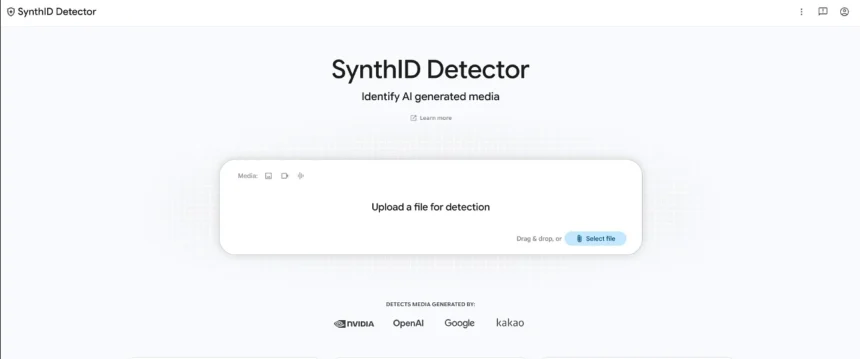
Google has opened its SynthID Detector to the public. Anyone can go to the website today, upload an image, a video or an audio file, and get an answer on whether it came out of an AI model. It works in English only for now, and it covers content from Google, OpenAI, Nvidia and Kakao, with Apple’s AI tools being added next.
What The Tool Is Looking For
SynthID is a watermark that these companies bake into the file itself, invisible to a person looking at the picture or listening to the clip. The detector scans the upload for that mark. If it finds one, the file was AI made. Google says it has put SynthID on more than 180 billion images and videos and 240,000 years of audio since 2023, which is a big enough pool that a random AI image you’ve been sent has a reasonable chance of being in it.

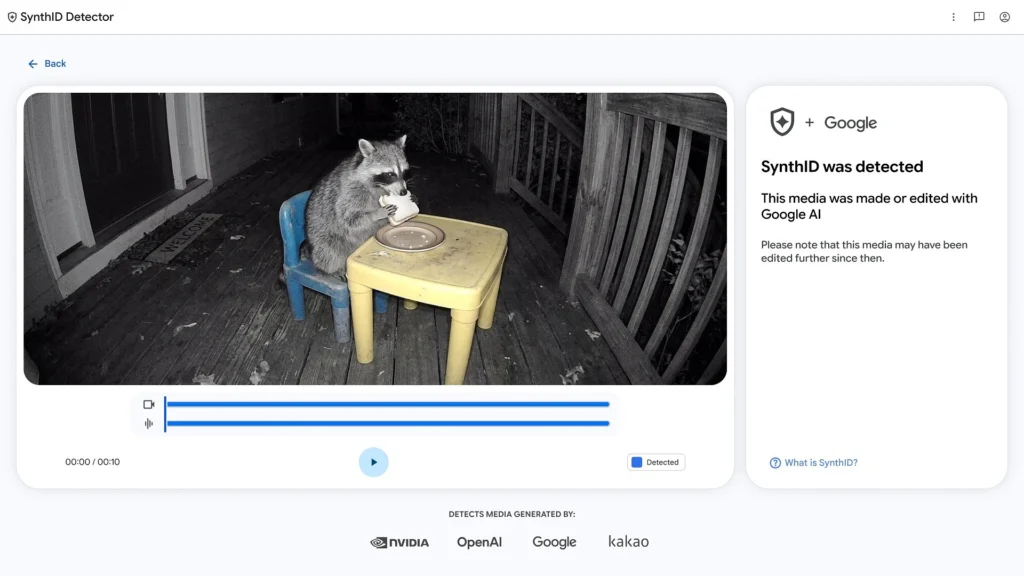
Until now the only ways to check were through Gemini, where you could ask it about a file, or through an early version of the portal that went to journalists and media staff last year. The open website removes both of those steps.
What A “No Watermark” Result Does Not Mean
This is the part worth understanding before anyone starts forwarding results around. The detector only finds files that carry a SynthID mark, so a clean result tells you the file has no watermark, not that a human made it. Midjourney, Stable Diffusion, Grok and a long list of smaller generators have never signed up, and anything from those will come back clean even though it is entirely synthetic. OpenAI only agreed to the watermark in May, so older ChatGPT images may not carry it either.
Google has not released an API for the detector, and its reasoning is that making the check too easy to run at scale would help people learn how to strip the mark out. Fair enough, though it also means the tool stays a manual, one file at a time check.
For what it does cover, the detector is quick and free, and the Apple addition will close one more gap. Just read the result as “watermark found” or “watermark not found” and keep the word “real” out of it.