MobileMall BlogMobileMall BlogMobileMall Blog
  • #Explore
  • Business
  • Technology
    • Gaming
    • Headphones
    • Laptops
    • Mobile Accessories
    • Home Networking
    • PCs
    • Printers
    • Smart Watches
    • Speakers
    • Streaming Devices
    • Tablets
    • Wearables
    • Smart Office
  • Security
  • Buying Guides
  • Contribute
Reading: Biometrics: What It is And Why It’s a Game-changer
Share
Font ResizerAa
MobileMall BlogMobileMall Blog
Font ResizerAa
  • #Explore
  • Business
  • Technology
  • Security
  • Buying Guides
  • Contribute
  • #Explore
  • Business
  • Technology
    • Gaming
    • Headphones
    • Laptops
    • Mobile Accessories
    • Home Networking
    • PCs
    • Printers
    • Smart Watches
    • Speakers
    • Streaming Devices
    • Tablets
    • Wearables
    • Smart Office
  • Security
  • Buying Guides
  • Contribute
2025 © Mobilemall. All Rights Reserved.
Home » Blog » Biometrics: What It is And Why It’s a Game-changer
Data ScienceTechnology

Biometrics: What It is And Why It’s a Game-changer

Liron Segev (Tech Geek)
Last updated: November 11, 2025 9:47 am
Liron Segev (Tech Geek)
Share
Biometrics: What It is And Why It’s a Game-changer
SHARE

Contents

  1. Different Types of Biometrics
  2. The Most Common Biometrics in Cybersecurity
    1. Voice Recognition
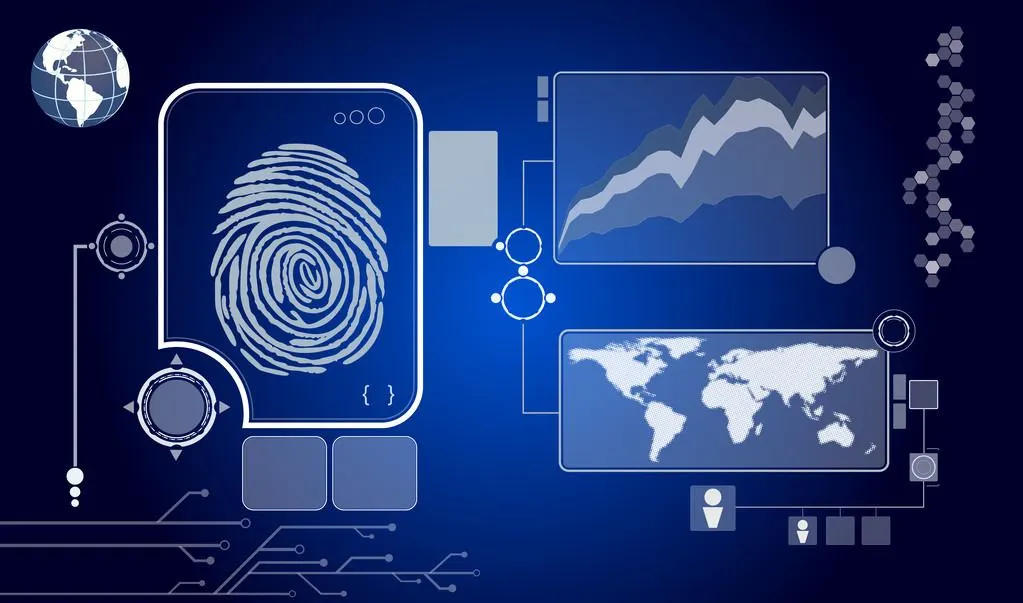
    2. Fingerprints
    3. Eye Scanning (Iris and Retinal)
    4. Facial Structure

Cybersecurity is a major concern these days. Everyone’s looking for better ways to protect their data and devices. While most companies are concentrating on better encryption and employee training, one area ripe for increasing attention is access control—basically, figuring out who gets to access to the devices and all that juicy info stored in them. 

So how are businesses handling access control? For many, access control means turning to  “biometrics,” which is verifying a user’s identity by checking their unique biological traits. These traits—think fingerprints, iris patterns, and facial features—are unique to each person, making them perfect for keeping things secure as today’s technologies can’t copy them like a password or ID card. Companies in the healthcare and industrial sectors, especially, have highly sensitive data that can cost them millions, if not billions, if stolen as well as legal hassles. 

Different Types of Biometrics

Biometric cybersecurity comes in several categories, each focusing on a different biological aspect of the user. 

  • Biological biometrics: These focus on traits at the genetic level, like DNA. Biological biometrics is usually reserved for severe situations like criminal investigations, as few people want to provide bodily fluid and tissue on a constant basis to access data. 
  • Morphological biometrics: This form of biometrics checks out a person’s physical traits. Think the color of one’s eyes, fingerprints, and the shape of a face. Morphological biometrics is most commonly used for security purposes, as it’s easy to set up a computer with a camera and image recognition software.
  • Behavioral Biometrics: How a person speaks, their walk, and even their typing habits can be used to access computer systems thanks to behavioral biometrics. Voice recognition is the most popular example of this form of biometric security. 

The Most Common Biometrics in Cybersecurity

Voice Recognition

As previously mentioned, voice recognition is part of the behavioral biometrics subgroup and is one of the most common forms. Voice recognition technology analyzes the sound, rhythm, and patterns of an employee’s voice. It’s surprisingly tricky to replicate someone’s voice thanks to physical factors such as the shape and size of one’s mouth, throat, and even the nose. Thus, much like a fingerprint, a digital template or “voiceprint” can be taken by software and used to access (and prevent access) to private data. 

Fingerprints

And as everyone knows, fingerprints are totally unique, which makes them excellent when verifying who someone is. Even better, fingerprint scanners can easily be built into everything from smartphones to industrial tablets. 

There are a few different types of fingerprint scanners, which analyze the patterns, ridges, and tiny details of a fingerprint, capturing and converting it into a digital format to be compared to stored records.

  • Optical: Takes a picture of a fingerprint.
  • Capacitive: Uses electrical currents to map out the print.
  • Thermal: Detects subtle temperature differences between the ridges and valleys of a fingerprint.

Eye Scanning (Iris and Retinal)

Eyes, just like fingerprints, don’t change much from a person’s childhood on, as the iris and retina are unique and pretty much stable throughout one’s life.

Iris scanning software works by looking at the colored part of a person’s eye, while retinal scanning focuses on the back of the eye. Both use a low-energy infrared light beam to detect temperature differences in those structures. Because each absorbs that light differently than the surrounding area, they create an “eyeprint” unique to the individual. This incredible detail and uniqueness – especially of the iris – make it nearly impossible to fool this particular form of biometric system outside of spy movies.

Facial Structure

Finally, there’s the use of one’s entire face for cybersecurity. With this form of scanning, the physical dimensions of a person’s face, from the distance between their eyes, the distance from their forehead to the chin, to even the shape of their cheekbones, are scanned and digitalized as a biometric ID. Simply, these characteristics are super difficult to alter or replicate as they’re determined by the underlying bone structure. 

As the demand for strong cybersecurity and effective access control ramps up, using biometric solutions is going to become even more common. Companies might mix and match different biometric types depending on the level of security needed. A high-security environment like a server farm, for example, might require both a fingerprint and a retinal scan to access a particular room or even a computer. Regardless, businesses can better protect their data and devices while ensuring that only the right people have access with these innovative measures.

Nokia and Samsung sign video patent licensing deal, Nokia will receive royalty payments
YouTube Finally Lets You Kill Shorts Entirely
Crypto in Your Pocket – Easy & Fast Mobile Transactions
Security Update Roll Out Confirmed For Samsung Galaxy A01
How to Compress PDF File on Mobile?

Sign Up For Daily Newsletter

Be keep up! Get the latest breaking news delivered straight to your inbox.
[mc4wp_form]
By signing up, you agree to our Terms of Use and acknowledge the data practices in our Privacy Policy. You may unsubscribe at any time.
Share This Article
Facebook Copy Link Print
Share
ByLiron Segev (Tech Geek)
Follow:
Liron Segev, also known as TheTechieGuy, is a tech expert who believes that technology should be simple and accessible to everyone. With a knack for breaking down complex topics into easy-to-understand terms, Liron has become a trusted source of information for tech enthusiasts and novices alike. Allowing readers to learn about topics like security issues (such as hacking, passwords, and scams), connectivity (including wifi, routers, mesh networks), and helpful tips and tricks for optimizing technology and achieving faster internet speeds.
Previous Article Samsung Exynos 1480 Samsung announces the Exynos 1480, its latest flagship chipset with cutting-edge technology.
Next Article Xiaomi would reveal the 15 series Xiaomi unveils official visuals of the 15 and 15 Pro, ahead of October 29 announcement.

Latest News

5G Rugged Projector Phone
5G Rugged Projector Phone –  Here’s Why Someone Would Pick This?
Smartphone
ai-smartphone
OpenAI’s Phone Has a Chip, a Timeline, and Suddenly Feels Very Real
Artificial Intelligence Tech News
rcs-encryption-iphone
RCS Encryption Is Coming to iPhones
Apple News
Three Breaches in Q1 2026 Stryker, European Commission, and PayPal
Three Breaches in Q1 2026 Where the Warning Signs Were Already There — Stryker, European Commission, and PayPal
Cyber Security
samsung
Samsung’s 4nm Is Growing Up, and the Timing Isn’t Accidental
News Samsung
oneplus-realme-merger
Two Brands, One Roof: OnePlus and Realme Are Reportedly Merging
Tech News
google-translate-pronunciation-practice
Google Translate Is 20, and It Just Got the One Thing It Was Missing
Google News
pixel-11-tensor-g6-leak
Tensor G6 Leak Points to New CPU Cores, but the GPU Situation Is Complicated
Google Phone Leak

You Might also Like

Buying vs. Leasing Your Business Mobiles
BusinessTechnology

Tech Debt or Asset? The Real Cost of Buying vs. Leasing Your Business Mobiles

Liron Segev (Tech Geek)
4 Min Read
Smartphone-memory-price-surge
SmartphoneTech News

Phones Are About to Get More Expensive and the Reason is Memory Costs

Mobilemall Staff
Mobilemall Staff
3 Min Read
Tanzohub: Platform for Learning and Creating in Tech
Technology

Tanzohub: Platform for Learning and Creating in Tech

Liron Segev (Tech Geek)
19 Min Read

About us

Mobilemall.co blog is an informative and engaging platform that offers readers the latest news and insights on mobile phones and accessories. The blog covers a wide range of topics, including product reviews, industry trends, and tips on how to get the most out of your mobile device.

Contact Us:
[email protected]

Categories Link

  • Business
  • Mobile
  • Technology
  • Gaming
  • Phone Review
  • Android

Must Read

Two screens, three screens, four — none of it works
Struggling to Manage Multiple Screens – The Biggest Mistake Teams Make
Innovation
ASUS ROG Phone 9 and Google Pixel 10 Pro
I Compared the ASUS ROG Phone 9 and Google Pixel 10 Pro for Gaming — The Benchmark Gap Is Brutal
Comparison

Quick Links

  • Privacy Policy
  • Tech Write For Us
  • Contact Us
  • Facebook
  • Instagram
  • YouTube
  • LinkedIn
2026 © Mobilemall. All Rights Reserved.
Go to mobile version
Welcome Back!

Sign in to your account

Username or Email Address
Password

Lost your password?

Not a member? Sign Up