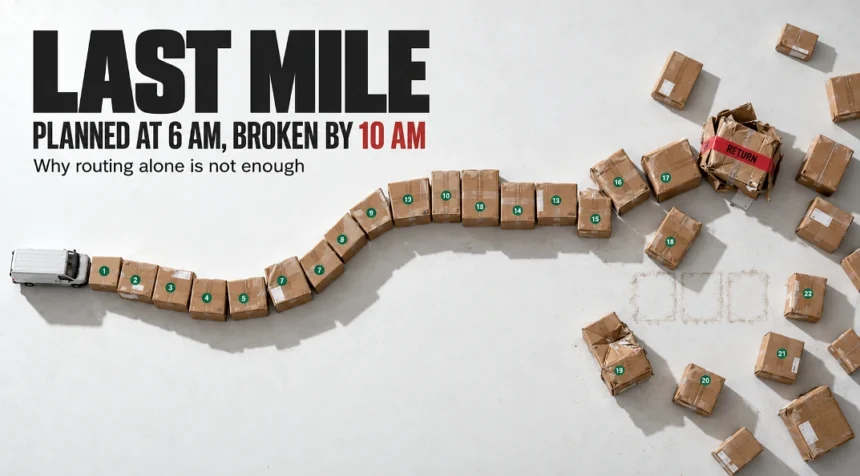
Routing efficiency is the first fix most logistics teams reach for when delivery performance drops. But a last mile delivery solution built around routing alone consistently falls short of operational expectations. The plan leaves the depot looking optimized. By mid-shift, reality has already diverged.
Failed attempts pile up, dispatchers scramble, and customer service queues fill with WISMO calls. Delivery failure rates remain stubbornly high across regions, even in operations running sophisticated route optimization tools.
Routing is a starting point, not a complete strategy. A complete last mile delivery solution must extend well beyond the route plan to address execution, carrier complexity, and customer experience.
Let’s examine where routing-only platforms fall short.
Why Routing Alone Cannot Sustain Last Mile Delivery Performance
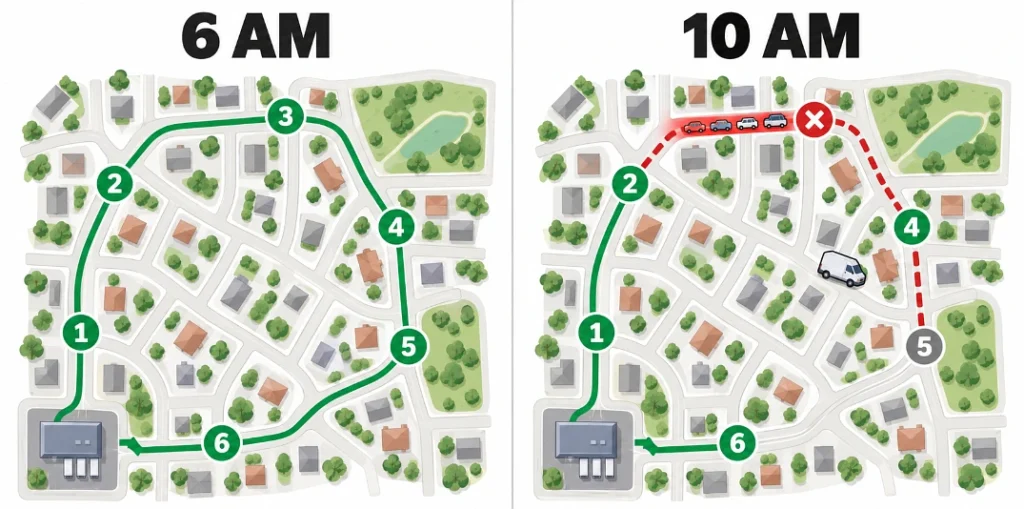
Routing solves the planning problem. It does not solve the execution problem, and that gap is where most delivery failures occur. A route sequenced perfectly at 6 AM can be unrecognizable by 10 AM. Traffic anomalies, driver delays, failed access attempts, and order cancellations all corrupt the original plan.
Without a dynamic execution layer sitting beneath the routing engine, a last mile delivery solution has no mechanism to absorb mid-shift disruptions. The result is a cascade of missed delivery windows, unplanned re-attempts, and inflated cost per delivery.
The Execution Gap That Routing Platforms Consistently Ignore
Routing platforms are built to generate plans, not manage what happens after the driver departs. The gap between plan output and field execution is where SLA risk accumulates fastest.
- Fixed Plans Break Before the First Delivery Hour Ends
Route plans built on fixed sequencing assume conditions will hold across an entire shift. Real-time traffic feeds, geofence triggers, and live driver telemetry must feed back into an adaptive routing engine continuously.
- No Mechanism for Same-shift Exception Recovery
When a delivery attempt fails, most routing-only platforms flag it and move on. They do not automatically re-sequence remaining stops, reassign to a nearby driver, or trigger a customer re-engagement workflow within the same shift. Each failed attempt becomes a next-day problem, compounding FADR rates and adding re-delivery cost to every non-compliant route.
- Dispatcher Visibility Stays at the Plan Level, not the Execution Level
The route progress shown as a non-dynamic ETA is not operational visibility. Dispatchers need stop-level status updates, deviation alerts, and predictive SLA risk signals to intervene before a breach occurs. Routing dashboards built only for planning cannot provide this level of execution intelligence.
Carrier Network Complexity That Route Optimization Cannot Resolve
Most enterprise last mile operations run across mixed carrier networks: owned fleets, 3PLs, gig partners, and regional couriers. A last mile delivery solution that optimizes routes only within a single fleet tier misses the majority of the network.
Rate-based routing logic must evaluate cost, capacity, and performance data across every carrier tier before allocating a stop. Without this capability, high-volume shippers consistently over-allocate to premium carriers when lower-cost compliant alternatives are available. The annual savings achievable through rate-based routing are unreachable from a routing-only platform.
Multi-carrier last mile logistics tracking is equally critical. When carriers operate outside a unified visibility layer, planned versus actual variance goes undetected until the customer complaint arrives.
Customer Experience Is a Delivery Execution Problem, Not a Post-Delivery One
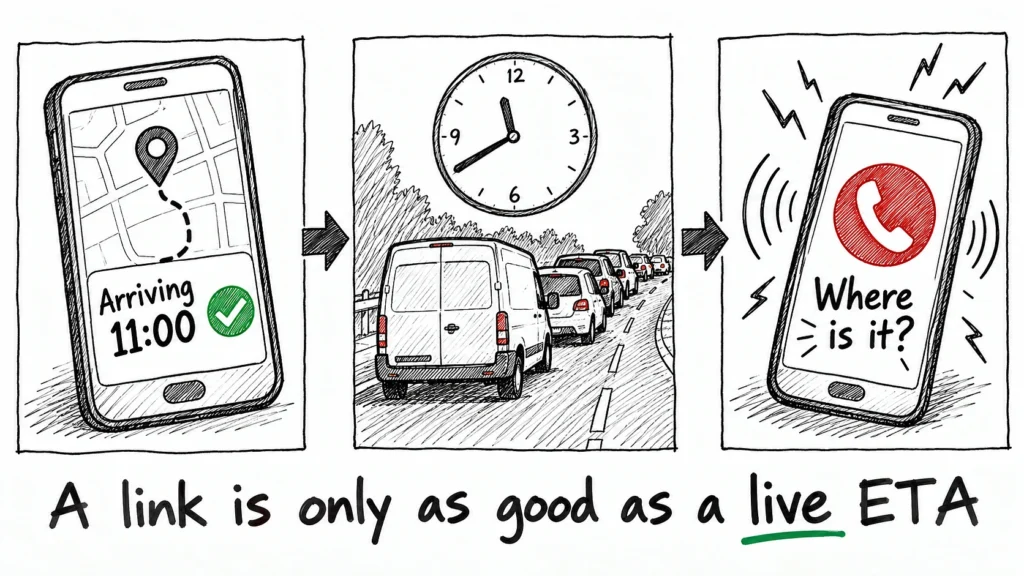
Customer-facing failures in last mile delivery do not originate after the shift ends. They originate mid-execution, when visibility breaks down and communication stops reflecting what is actually happening in the field.
- WISMO Calls are a Symptom of Visibility Failure, not Communication Failure
Sending a tracking link does not eliminate WISMO volume. If that link reflects a fixed ETA that diverged from actual driver progress hours ago, it generates more calls than it prevents. Real-time last mile parcel tracking requires live driver location feeds, dynamic ETA recalculation, and proactive exception notifications tied to actual delivery status.
- Proof-of-Delivery (PoD) Standards Vary, and Manual Processes Create Compliance Risk
B2B last mile delivery operations require electronic proof of delivery, signature capture, one-scan pallet verification, and in some sectors, email OTP confirmation before handoff. A last mile delivery solution without a structured ePOD and compliance documentation layer creates audit exposure and disputes that route optimization cannot prevent.
- Hyper-personalized Delivery Preferences are now a Baseline Expectation
Customers expect to select delivery slots, redirect in-flight shipments, and receive updates tied to their actual stop sequence. These capabilities require a customer experience layer integrated directly into the delivery execution engine, not a separate notification tool bolted on post-routing.
Analytics and Continuous Improvement Are Absent From Most Routing Tools
Route optimization produces a plan. It does not produce insight. A last mile delivery solution without a business analytics layer cannot identify which stops carry repeat failure risk, which carriers consistently miss SLA thresholds, or which zones generate disproportionate re-attempt volume.
Planned versus actual performance tracking at the stop, route, carrier, and region level is what converts delivery data into operational improvement. Without business metrics feeding back into planning logic, route quality degrades over time rather than improving. Predictive risk visibility requires historical performance data that routing tools do not retain or analyze.
What a Complete Last Mile Delivery Solution Actually Requires
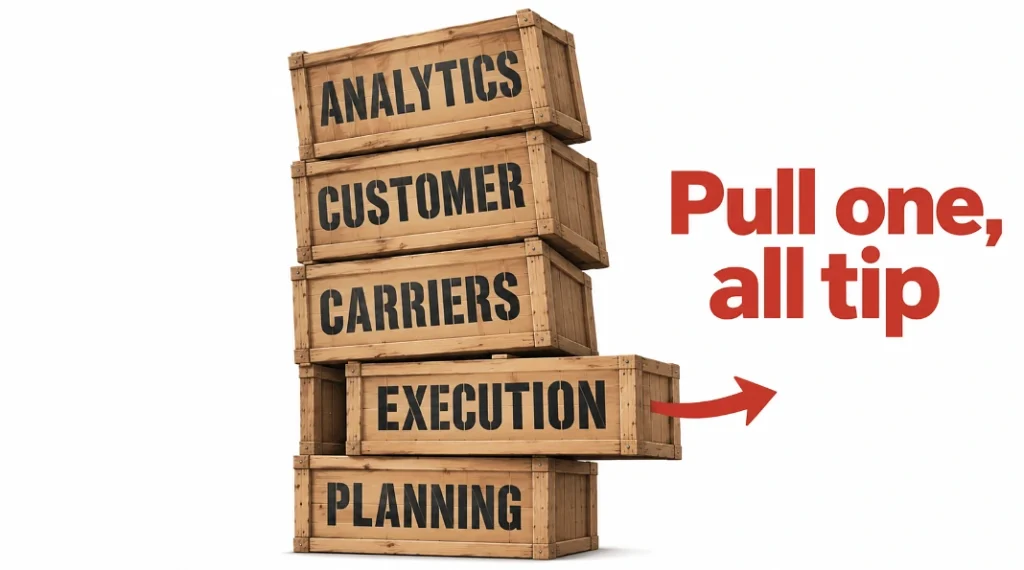
An effective last mile delivery solution must operate across five layers simultaneously:
- Planning
AI-based route optimization across all orders, vehicles, drivers, and road constraints
- Execution
Real-time re-sequencing, exception detection, and same-shift recovery workflows
- Carrier Management
Rate-based allocation, multi-carrier visibility, and performance governance
- Customer Experience
Live last mile delivery tracking, proactive notifications, slot booking, and ePOD compliance
- Analytics
Stop-level variance reporting, predictive SLA risk, and carrier scorecard data
Each layer is interdependent. A failure at execution degrades customer experience regardless of how well the route was planned.
Choose a Last Mile Delivery Solution That Extends Beyond the Route Plan
Routing optimization is necessary. It is not sufficient. Most delivery failures that operations cannot eliminate begin in the execution layer. They usually appear through missed exception windows, carrier visibility gaps, and rigid customer communication.
Over time, these issues become harder to resolve when planning systems lack feedback loops from real performance data. A last mile delivery solution that addresses only the route plan leaves the majority of operational risk unmanaged.
The market demands speed, accuracy, and transparency that no single-layer platform can deliver. With technology partners such as FarEye, enterprises gain a unified platform spanning routing, execution, carrier management, customer experience, and analytics. Scaling last mile delivery performance requires closing every gap, not just the one that appears first on a route plan.