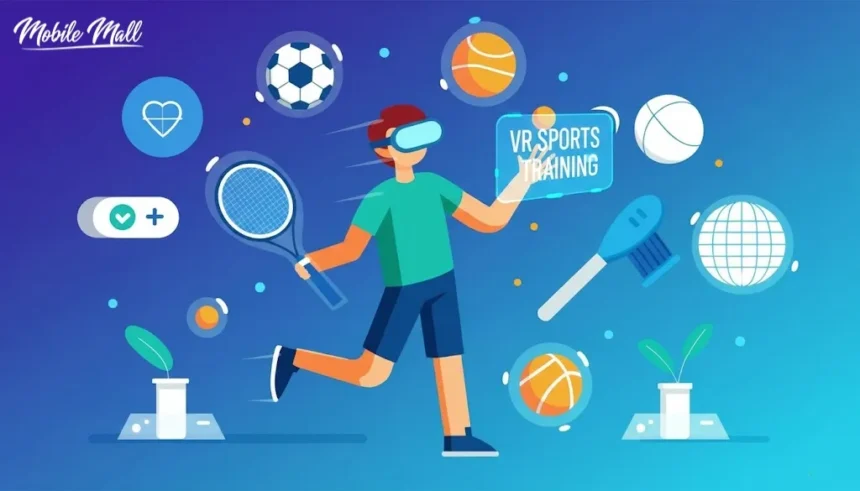
Sport has always been about the body and the brain working together. But in 2025, a third element has entered the equation: code. Athletes now train inside headsets. They study opponents through simulations. And some are coached by software that watches their every movement and responds in real time.
The shift happened faster than most people expected. Five years ago, VR training was a curiosity – something NFL teams experimented with, something tech companies pitched at conferences. Now it’s embedded in programs from professional leagues down to high school athletics. A 2025 systematic review published in Frontiers in Sports and Active Living found VR applications across almost every sport category: team sports, martial arts, individual disciplines, and rehabilitation.
The question isn’t whether virtual training works. It does. The question is how far it can go.
What Actually Happens in VR Training
Forget the sci-fi imagery for a second. Most VR sports training looks pretty mundane from the outside. An athlete wearing a headset, standing in an empty room, making small movements. But inside that headset, they’re reading defensive coverages, tracking opponents, or visualizing a race course they’ve never physically visited.
The Dallas Cowboys, New England Patriots, Arizona Cardinals, and San Francisco 49ers all use VR systems for quarterback training. The technology captures 360-degree footage of practices and games, then lets players rewatch from the exact perspective they’d have on the field. Carson Palmer, during his time with the Cardinals, described it bluntly: “I don’t buy into all the new technology, but I am all in on this.”
What made him a convert? He could practice his throwing motion, see the result of different elbow placements, run through defensive reads – all without the physical toll of a full practice. And the data backs up the enthusiasm. The Kansas City Chiefs reported that their VR quarterback program reduced decision time by 0.24 seconds while improving accuracy on complex coverage reads by 31%.
That fraction of a second matters when a defensive lineman is closing in.
The Numbers Behind Virtual Reps
College football programs face strict NCAA limits on practice hours and film study time. VR sidesteps that restriction. Players can log hundreds of additional repetitions without it counting against their regulated hours. By some estimates, a third of NCAA Division 1 football programs now use VR training.
The French Olympic boxing team took a different approach before the Paris 2024 Games. Working with the Inria research center at Rennes University, they built a VR system specifically to train anticipation – the ability to read an opponent’s body and predict what punch comes next. The system used motion capture data from professional boxers, creating virtual opponents with realistic movement patterns. Boxers could face these digital opponents repeatedly, drilling a specific sub-skill without the physical exhaustion of actual sparring.
The Golden State Warriors used VR to address something more psychological: free-throw shooting under pressure. Players practiced buzzer-beater scenarios with simulated crowd noise and game clock pressure. The result was a 7.3% improvement in free-throw percentage over a single season.
Where Holograms Come In
Holographic coaching is newer and less proven than VR, but it’s advancing quickly. The basic idea: instead of watching a flat video of proper technique, an athlete can see a three-dimensional figure demonstrate the movement right beside them. They can walk around it, view it from any angle, and match their body position against it.
American University’s IDEAS Institute has developed a holographic sports library – short exercises captured in a volumetric recording studio. Users view these holograms through AR headsets or even mobile phones, stepping into imitate the motion. It’s fundamentally different from video instruction because the spatial information remains intact.
South Korea has pushed furthest into practical applications. According to industry reports, 52% of youth volleyball academies there use augmented repetition loops – systems where players execute a movement, then immediately see a holographic replay of themselves performing it. The feedback cycle is nearly instant.
AI-powered voice coaching adds another layer. Systems like CoachAI (used in 40 national athletic programs globally) provide verbal commands synchronized with an athlete’s real-time movement. The software tracks what the athlete does, identifies errors, and corrects them through audio cues while the training continues.
The Cognitive Training Nobody Talks About
Athletic performance isn’t purely physical. Reaction time, decision-making speed, and anticipation – these cognitive skills separate elite athletes from everyone else. And they can be trained outside traditional sports contexts.
The Plinko game Bangladesh offers an interesting case study. It’s a simple premise: falling chips, unpredictable bounces, probability calculations happening in real time. Players must anticipate outcomes and adjust their approach based on observed patterns. The game structure activates the same neural pathways used in athletic decision-making – the rapid assessment of variables, the prediction of trajectories, the calibration of responses.
This isn’t about replacing physical training. It’s about recognizing that cognitive conditioning follows the same principles of repetition and feedback that govern muscle memory. A goalkeeper reading a penalty kicker’s body language uses similar mental processes to a Plinko player reading ball trajectories.
When Data Becomes the Coach
Every athlete generates enormous quantities of performance data during training. Heart rate, joint angles, movement velocity, and reaction times. The challenge has always been turning that raw information into actionable coaching.
AI systems are closing that gap. A 2024 University of Queensland study found that athletes using AI-aided visualization improved focus by 18% and reduced injury risk by nearly 25%. The software doesn’t replace human coaches – it gives them visibility they couldn’t have otherwise.
Platforms like Melbet download apps demonstrate how sophisticated software can feel intuitive to everyday users. The same principles apply to athletic training technology: complex data processing running behind simple interfaces. Athletes get immediate feedback without needing to understand the algorithms generating it. Speed, multilingual accessibility, secure data handling – these technical requirements matter whether you’re building a sports analytics platform or any other digital tool people interact with daily.
Bayern Munich’s goalkeeper program uses VR simulations that have improved save percentages on set pieces by 23%. The system doesn’t just record performance; it identifies patterns, highlights weaknesses, suggests specific drills. Human instinct still drives the final decisions, but it’s instinct informed by analysis no person could perform manually.
What Hasn’t Changed
The technology is impressive. The results are measurable. But strip away the headsets and holograms, and the core of athletic training remains exactly what it’s always been.
VR training is still training. It supplements physical practice rather than replacing it. A systematic review from Frontiers in Sports put it directly: “The use of virtual reality cannot replace talent and perseverance in training. Endurance athletes will need to train many hours a week to improve their maximum oxygen capacity. Training on the ball is essential for professional footballers.”
The athletes using these tools aren’t looking for shortcuts. They’re looking for edges – ways to accumulate more mental reps, study more film, and refine technique faster. The Kansas City quarterback who shaved 0.24 seconds off his decision time still had to make those decisions under real pressure with real consequences.
What Comes Next
Mixed reality is the likely next step. Athletes wearing headsets on actual training grounds, seeing digital overlays on physical spaces. A sprinter could run on their regular track while surrounded by a virtual Olympic stadium – packed crowds, competition noise, the psychological weight of the moment. The physical effort stays real while the environmental context becomes malleable.
Team training in shared virtual spaces is already being tested. Players scattered across different cities practice coordinated plays against AI opponents that adapt to their strategies. The logistics of getting everyone physically together become less critical when virtual collaboration reaches sufficient fidelity.
The barriers are coming down in other ways, too. What used to require Olympic-level facilities is reaching youth programs and public schools. Holographic coaching units have been deployed in 15 countries through initiatives like the Global Youth Athletics Initiative, providing access to training methods previously reserved for elite programs.
The hardware keeps getting lighter, the software keeps getting smarter, and the gap between simulation and reality keeps shrinking. None of it changes the fundamental truth that athletic excellence requires effort, discipline, and whatever advantage you can find.