
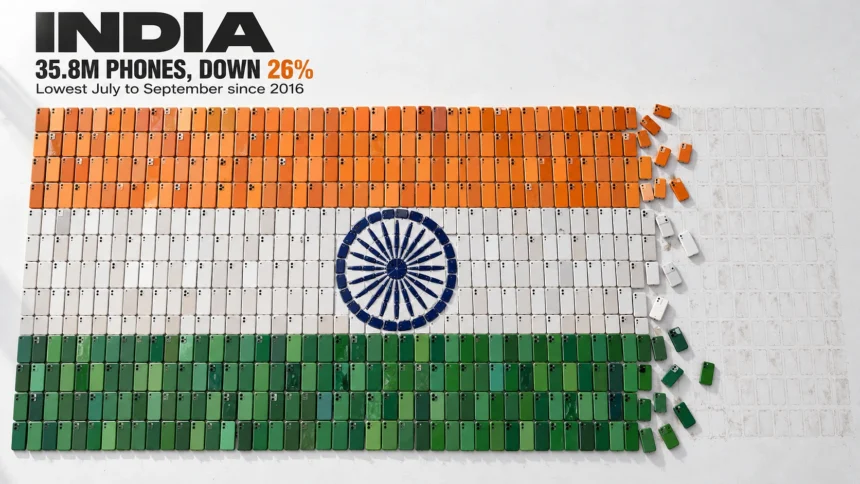
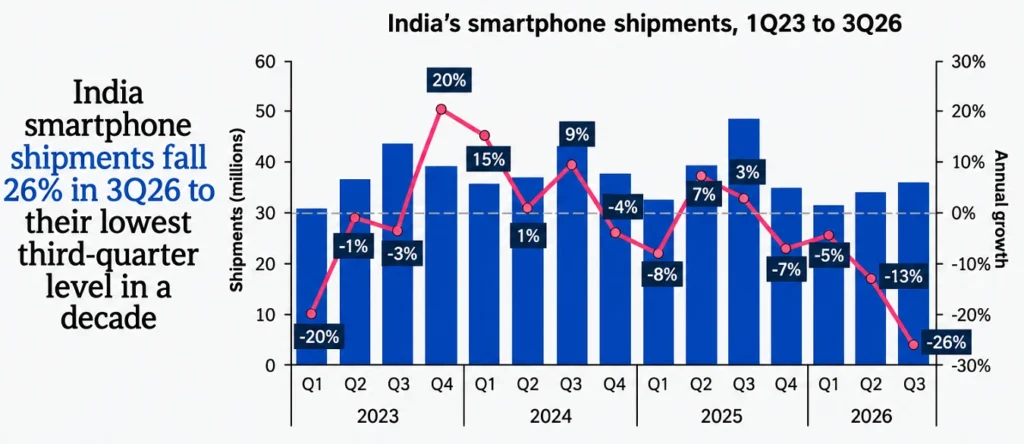
India shipped 35.8 million smartphones between July and September, which is 26% fewer than the same three months last year and the lowest third-quarter total since 2016, according to Omdia’s latest numbers. A year earlier that quarter had come in at 48.4 million, so roughly 12.6 million phones went missing from the market, and it happened while the festive season was getting started, which is normally when Indian buyers spend.
Omdia puts it down to higher prices and cautious spending, though those are really one problem. Memory chips have been getting more expensive all year, brands passed that on, and buyers looked at the new price tags and held on to the phones they already had.
Samsung Is Back On Top Because It Barely Lost Anything
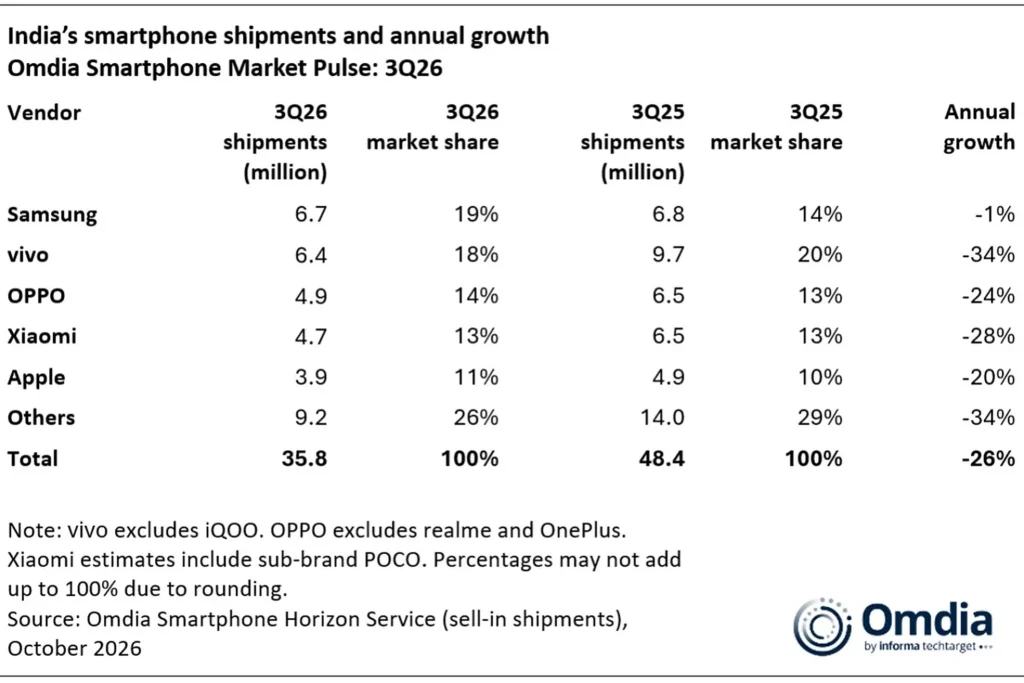
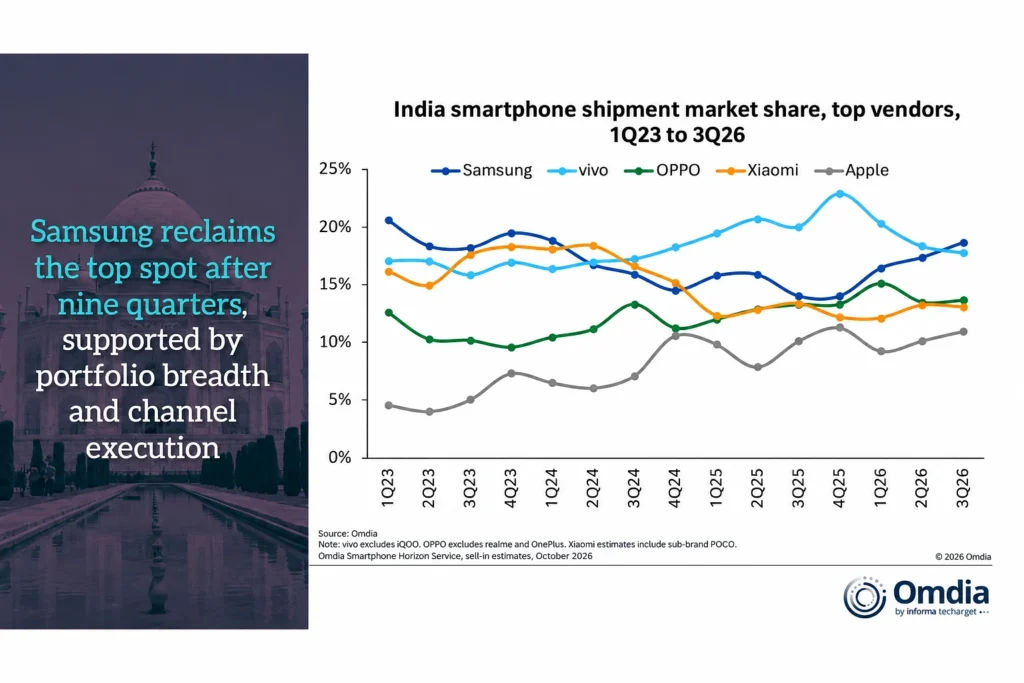
Samsung shipped 6.7 million phones and took the number one spot for the first time since early 2024, with about 19% of the market. The more telling part is the comparison with last year, when it shipped 6.8 million in the same quarter, so in a market that shrank by a quarter, Samsung’s volume hardly moved.
The cheap Galaxy A07, A17 and A27 did most of that work. The Galaxy S26 series, the new foldables and the S26 FE added to it at the top end.
How The Rest Of The Top Five Did
- vivo: 6.4 million, down 34%, the steepest fall in the top five
- Oppo: 4.9 million, down 24%
- Xiaomi: 4.7 million, down 28%
- Apple: 3.9 million, rounding out the five
vivo’s drop came from raising prices several times in a row, which left retailers unsure how much stock to order, and it was short on entry-level phones as well. The Y11 5G and Y21 5G carried most of its volume, with the returning S series, led by the S2, chipping in.
Oppo’s problem was its A series, the phones that normally sell in big numbers, which got squeezed by price rises and by shops ordering carefully. The Reno16 series held up better, helped along by its cameras and by financing deals.
Xiaomi has always sold on value, and rising component costs ate into exactly that. The Redmi 15A and Redmi A7 kept volumes going, while the Redmi Note 17 series, the Poco X8 and the Poco X8 Power covered the pricier end.
Apple Did Well Without A New Base iPhone
Apple doesn’t have a base iPhone 18 yet, so the iPhone 17 and iPhone 16 kept selling, and retailers stocked up ahead of expected price increases. The iPhone 18 Pro and 18 Pro Max arrived late in the quarter and picked up quickly, with bank cashback, exchange bonuses and no-cost EMI schemes doing a lot of the persuading. Its 3.9 million is still down from 4.9 million a year ago, when Apple had posted its best India quarter ever.
Chinese Brands Are Losing Ground To Samsung And Apple
Chinese brands together now hold about 68% of India’s market, down from 75% a year ago. Samsung and Apple took that share. Both have premium lineups, plenty of financing options and less stock sitting unsold in shops, which matters when retailers are nervous about what they order.
When Prices Might Settle
Omdia expects another small drop, in the low single digits, through 2027, with pricing pressure lasting at least into the first half of the year. Its survey also found that nearly four in ten people in India would pay more for a phone if the AI features were actually useful, and brands will probably lean hard on that in their next round of launches.