
Mobile gaming seemed destined for portrait mode dominance. The logic made sense since people hold their phones vertically for everything else. Yet somewhere between Angry Birds and today, landscape orientation became the default for serious mobile gaming. From casual titles like chicken road gambling game you can play on mobile for free to intensive battle royales, the horizontal format now rules the app stores. This shift happened so gradually that most players never noticed the transformation.
The turning point came when developers realized that portrait mode was solving the wrong problem. Yes, people hold phones vertically in daily life, but gaming is not a daily life activity. It is an escape from it.
The Thumb Zone Problem
Portrait games always struggled with a fundamental design flaw. Human thumbs can only reach so far across a screen when holding a phone with one hand. Developers spent years creating elaborate control schemes that tried to work around this limitation. Buttons clustered at the bottom. Swipe gestures replaced precise taps. Everything felt like a compromise.
Landscape mode eliminated this problem by accident rather than design. When players rotate their phones horizontally, both thumbs suddenly have equal access to opposite sides of the screen.
Fighting games discovered this first. Virtual joysticks on the left, action buttons on the right, just like console controllers, everyone already knew how to use. The muscle memory from decades of console gaming transferred instantly to mobile devices once developers embraced horizontal layouts.
The Screen Real Estate Revolution
Gaming needs visual space in ways that social media and messaging never will. A battle royale map requires peripheral vision. Strategy games need room for unit controls and battlefield views simultaneously. Racing games benefit from a wider field of view, which makes turns more intuitive and crashes more avoidable.
Portrait mode squeezes all this information into a narrow vertical strip. Important UI elements end up covering the action or getting pushed to screen edges, where they become hard to reach. Landscape format spreads everything across a wider canvas, which lets designers place elements where they make functional sense rather than where they physically fit.
The Console Migration
Major console franchises brought landscape orientation into the limelight. Call of Duty Mobile, Fortnite, and Genshin Impact all arrived in horizontal format because that is how their console versions worked. Players who wanted console-quality experiences accepted landscape as part of the package.

This created an unexpected quality signal. Landscape orientation began indicating serious games, while portrait suggested casual time killers. Publishers noticed this perception and positioned their premium titles accordingly. The format itself became part of the marketing message. High production budgets and landscape mode became synonymous in players’ minds.
What Can Portrait Do to Remain Relevant?
● Embrace One-Handed Gaming
Commuters on packed trains cannot rotate their phones horizontally. Parents holding babies need games that work with one free hand. Portrait developers should double down on this advantage rather than trying to compete with landscape complexity. Simple does not mean simplistic when executed well.
● Integrate With Phone Habits
Landscape gaming demands dedicated time blocks. A portrait mode can own the micro moments that fill modern life. Developers can ensure the possibility of quick sessions between messages, develop games that pause instantly when notifications arrive, and design experiences tailored for interruption rather than immersion.
● Target Social Media Integration
TikTok and Instagram Stories prove vertical video dominates social platforms. Portrait games designed specifically for viral clips and social sharing could reverse the streaming disadvantage.
● Focus on Narrative Experiences
Reading feels natural on vertical screens. Story-driven games could differentiate themselves through format choice and portrait mode to signal literary ambition rather than arcade action. This niche remains largely unexplored by major publishers.
Where Are We Now?
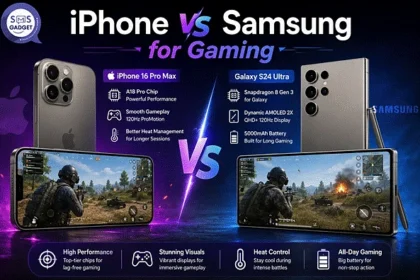
Even flagship phones, such as models from Samsung and Apple advertise gaming capabilities using landscape footage exclusively. Their display refresh rates, touch response times, and thermal management are all improved with gaming in mind. Even their marketing materials show phones horizontally more often now. The industry seems to have made a choice without announcing it.
Landscape won the competition through accumulated advantages that made vertical gaming feel increasingly limited. Players voted with their screen rotations, and developers followed. What seemed like a minor preference became the foundation of modern gaming without anyone declaring victory at any point in time.