Remember when the Vivo V5 went viral across India with that 20MP selfie camera. Everyone was losing their minds over a front-facing sensor. Then OPPO came in with the F1s and ran that “Selfie Expert” campaign on every billboard from Mumbai to Bangalore. Then Samsung took over the mid-range camera conversation with the Galaxy A series. Each time the phone camera game shifted in India, it shifted around one specific thing that one phone did better than everything else at that moment.
So right now if someone asks best camera phone in India, the safe answer is iPhone 17 Pro Max. Always is. But we are talking Android here.
Then the next thing out of most people is Galaxy S26 Ultra. Fair call. 91mobiles picked it as best overall camera phone in their June 2026 roundup. Samsung earned that.
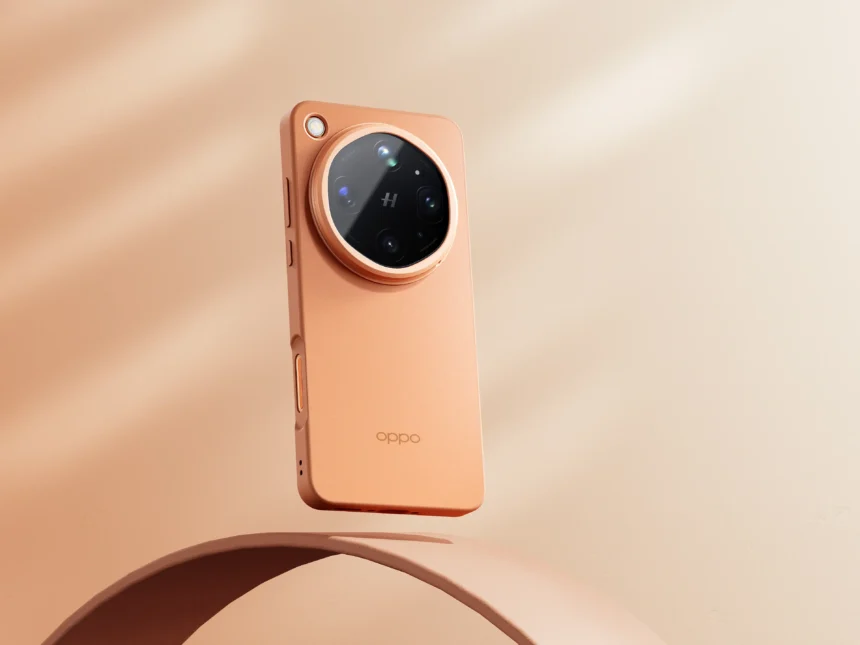
The OPPO Find X9 Ultra did something different with its portrait telephoto and this is the part that caught the attention of actual camera reviewers, not phone reviewers.
The 3x telephoto uses a 1/1.28-inch 200MP OmniVision OV52A sensor with an f/2.2 aperture at 70mm equivalent.
Why does that sensor size change how portraits come out?
The Galaxy S26 Ultra’s main camera, the primary shooter, uses a 1/1.3-inch sensor. OPPO put a sensor that is physically larger than that inside a telephoto lens. Not the main camera. The portrait zoom lens.
OPPO Find X9 Pro vs Galaxy S26 Ultra pic.twitter.com/ZC2Leh6ilP
— Ice Universe (@UniverseIce) February 28, 2026
Android Central flagged this specifically in their review.
When a portrait lens has that much sensor area behind it, depth of field stops being a software job. Light falls off naturally between subject and background the way it does when you shoot with a proper camera and a fast lens. The blur is not painted on afterwards by an algorithm trying to guess where your hair ends and the tree behind you begins.
HugTechs described the output as having “genuine optical depth of field” with transitions that avoid “the cutout look often associated with software-based portrait modes.”
That cutout problem, the paper-doll effect around hair and ears and fine edges, is the single most common complaint about phone portrait photography. It comes directly from software trying to separate subject from background in a flat image. A larger sensor reduces the need for that separation because the physics handle it before the software gets involved.
The 70mm Focal Length
Is 70mm actually the right focal length for portraits on a phone?
It has been the preferred portrait range on dedicated cameras for decades. Wide enough for half-body compositions without distorting facial features. Long enough to compress the background slightly and keep the viewer’s attention on the subject.
Go too wide and noses look bigger than they are. Cheekbones flatten out. Ears disappear behind the head.
Go too long and faces go flat, lose dimension, start looking like cardboard.
70mm avoids both problems. Digital Camera World’s reviewer put it plainly when they said it was the lens they “kept gravitating back to” across weeks of testing.
The Galaxy S26 Ultra and iPhone 17 Pro Max both max out at roughly 5x optical zoom. OPPO gives you 3x optical on the portrait telephoto plus a separate dedicated 10x optical on the periscope. For portraits the 3x is the one that matters and the sensor behind it is what separates this phone from everything else in the bracket.
What Camera Reviewers Said About the Portrait Output
Not phone reviewers. Camera reviewers. Publications that test Nikon glass and Canon bodies alongside smartphones.
- TechRadar titled their review “simply the best camera phone ever made”
- Amateur Photographer wrote that carrying the Find X9 Ultra was “the first time carrying just a phone no longer felt like a compromise”
- 9to5Google looked at the telephoto output and said the images “simply do not look like smartphone images”
- Digital Camera World described the telephoto as producing images with “genuinely photographic quality”
- Android Central noted the telephoto sensor is “bigger than the Galaxy S26 Ultra’s main camera, and this is the secondary lens”
OPPO claims the telephoto gathers 8.9 times more light than the Galaxy S26 Ultra at equivalent zoom. That number comes from OPPO’s own lab testing so factor in the usual marketing buffer. But the difference in night portrait quality between this telephoto and competing telephoto lenses is visible in published sample images without needing to measure anything.
The Spec Gap on Portrait-Relevant Hardware
| OPPO Find X9 Ultra | Galaxy S26 Ultra | iPhone 17 Pro Max | |
|---|---|---|---|
| Portrait telephoto sensor | 1/1.28″ 200MP | 1/2.52″ 50MP | 1/2.51″ 48MP |
| Telephoto aperture | f/2.2 | f/2.6 | f/2.8 |
| Portrait focal length | 70mm (3x) | 77mm (3x) | 77mm (5x) |
| Max optical zoom | 10x (separate lens) | 5x | 5x |
| Telephoto macro | Yes, 15cm | No | No |
Look at the telephoto sensor row.
Samsung and Apple use sensors in the 1/2.5-inch range for their portrait telephoto. OPPO uses 1/1.28-inch. That is roughly 4x the surface area. More sensor area means more light captured per pixel, less noise, sharper subjects in lower light, cleaner edge transitions between sharp and blurred areas.
The aperture gap compounds it. f/2.2 versus f/2.6 or f/2.8 means OPPO’s telephoto physically lets in more light per exposure. Combined with the larger sensor, depth of field calculations happen through optics rather than needing software to compensate for what the hardware cannot do on its own.
The 10x Optical Periscope for Tighter Portraits
OPPO built a periscope structure that folds light five times inside a 29mm module to achieve 10x optical at 230mm equivalent.
Samsung dropped dedicated 10x optical zoom after the Galaxy S23 Ultra.
Apple has never offered it.
For portrait photography this matters in specific scenarios. Compressed headshots from a distance. Candid portraits where you do not want to be close enough for the subject to feel the camera. Tighter compositions that isolate a subject hard against a distant background.
The 10x lens uses a 50MP sensor at f/3.5. Smaller than the 3x portrait lens. But it provides genuine optical quality up to 20x with crop assistance from the resolution.
Mark Ellis Reviews noted the distinction bluntly. The Find X9 Pro covers “great camera, great battery, great build” for most people. The Find X9 Ultra exists for someone who genuinely cares about the extra optical reach and the Hasselblad ecosystem.
Portrait photography falls squarely into that second category.
Where It Still Falls Short
The phone weighs 235 grams. Lighter than some competitors at this level but still substantial for extended portrait sessions where you are holding the phone at face height for minutes at a time.
The f/2.2 aperture on the telephoto is fast for a phone but still physically constrained compared to even a budget 85mm f/1.8 on a proper camera body.
Optical bokeh from a phone sensor, even one this large, will not match a full-frame camera with a dedicated portrait lens. The gap has narrowed enormously but it has not closed.
Price in India sits at the flagship level. For someone whose photography needs are met by a Galaxy S26 Ultra or iPhone 17 Pro Max, the incremental improvement may not justify the cost. For someone who shoots portraits regularly and has been frustrated by computational bokeh cutting through hair or producing unnatural background transitions, the hardware approach OPPO took with this telephoto sensor is a genuine answer to a specific problem that software has been unable to fully solve.
The camera publications landed on the same conclusion through different words. This is the phone where portrait output stopped looking like phone output. Whether that matters enough depends on whether portrait quality is the thing you care about most in a phone camera or whether it is one consideration among many.
91mobiles gave their portrait crown to the Vivo X300 Ultra for skin tones and focal length choices. That is a fair call for how people look in the final image. But what OPPO did with the telephoto sensor is a different argument entirely. Vivo tuned the software output. OPPO changed the physics of the lens.
Both approaches produce excellent portraits. The difference is that the Vivo approach has a ceiling determined by computational processing. The OPPO approach has a ceiling determined by sensor size and aperture, which is a ceiling that does not exist on the other phones because the hardware is not there.