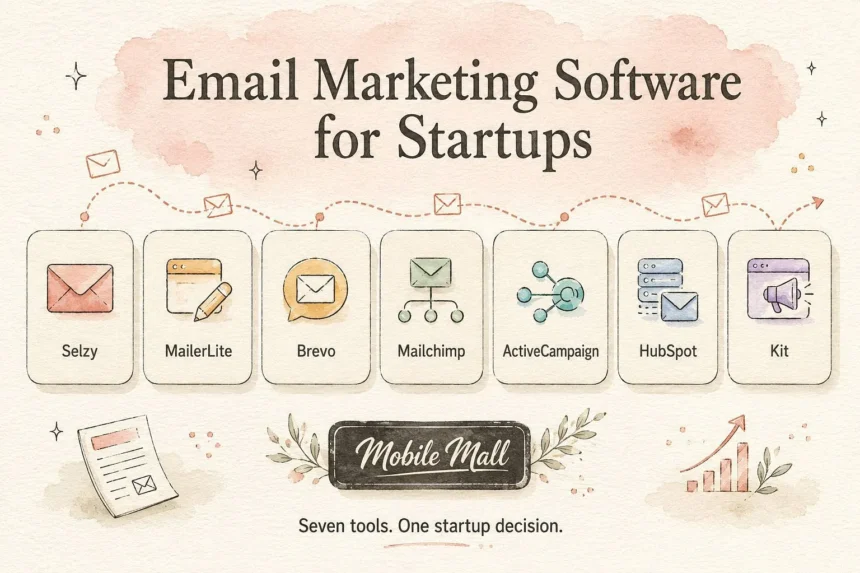
For most startups, the best email marketing software is the one a small team can launch in a day, automate within a week, and afford at 10x the current list size. Based on that standard, Selzy is the strongest starting point for most early-stage teams, MailerLite fits content-led acquisition, and ActiveCampaign or HubSpot make sense once your funnel gets complex.
Email can become one of a startup’s most dependable growth channels. It turns early visitors into leads, onboards new users, announces updates, recovers lost sales, and maintains relationships — all without a large advertising budget.
The challenge is choosing a platform that fits how a young company actually works: one marketer handling several channels, a limited budget, and no time for complicated implementation. Here’s how the seven best options compare.
1. Selzy — Best Overall for Startups
Product image: Selzy
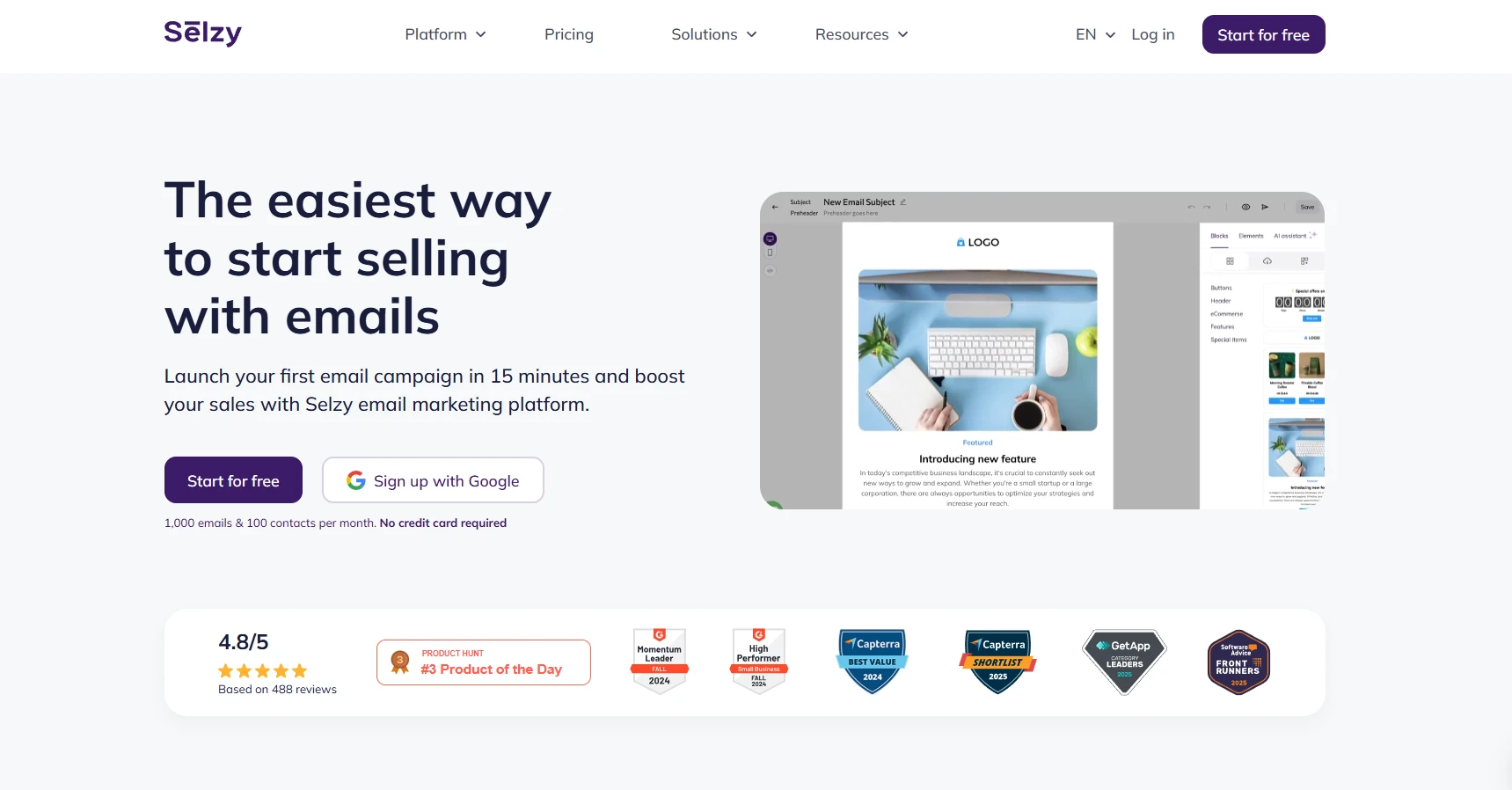
Selzy is a practical choice for startups that want to launch professional campaigns without dealing with an unnecessarily complicated interface. It combines email creation, contact management, segmentation, automation, and campaign reporting in one accessible workspace.
For startups planning bulk email campaigns, Selzy provides tools for building and sending mass emails while keeping templates, audience segments, and performance data together. The visual editor helps marketers create responsive messages without coding, while 100+ reusable templates make recurring newsletters and promotions faster to prepare. Selzy’s infrastructure delivers a 99.8% delivery rate across 1+ billion emails sent monthly — deliverability being the metric that quietly decides whether any of your other email work matters.
Automation supports welcome sequences, lead nurturing, onboarding, and follow-up communication. Teams can review delivery, opens, clicks, and unsubscribes to identify which campaigns engage subscribers and which need improvement. 24/7 live chat support with ~5-minute response times is available on all plans, including free — rare at this price point.
The straightforward workflow is especially useful when one person manages email alongside content, social media, partnerships, and other growth activities.
Pricing: Free plan — 1,000 emails/month to 100 contacts. Paid plans from ~$7/month (1,000 contacts, unlimited emails); pay-as-you-go available from $5 per 1,000 emails.
Pros:
- Fastest path from signup to first campaign (~15 minutes)
- Unlimited emails on paid plans; pricing scales by contacts only
- 24/7 support with minutes-level response time, even on free
- AI-assisted email builder with pre-made HTML modules
Cons:
- Automation requires the Standard plan and above
- Email-focused — no native SMS or WhatsApp channels
- Fewer third-party integrations than Mailchimp
Best for: Startups looking for an approachable combination of campaign creation, automation, segmentation, and analytics at a predictable price.
2. MailerLite — Best for Content-Led Startups
Product image: MailerLite
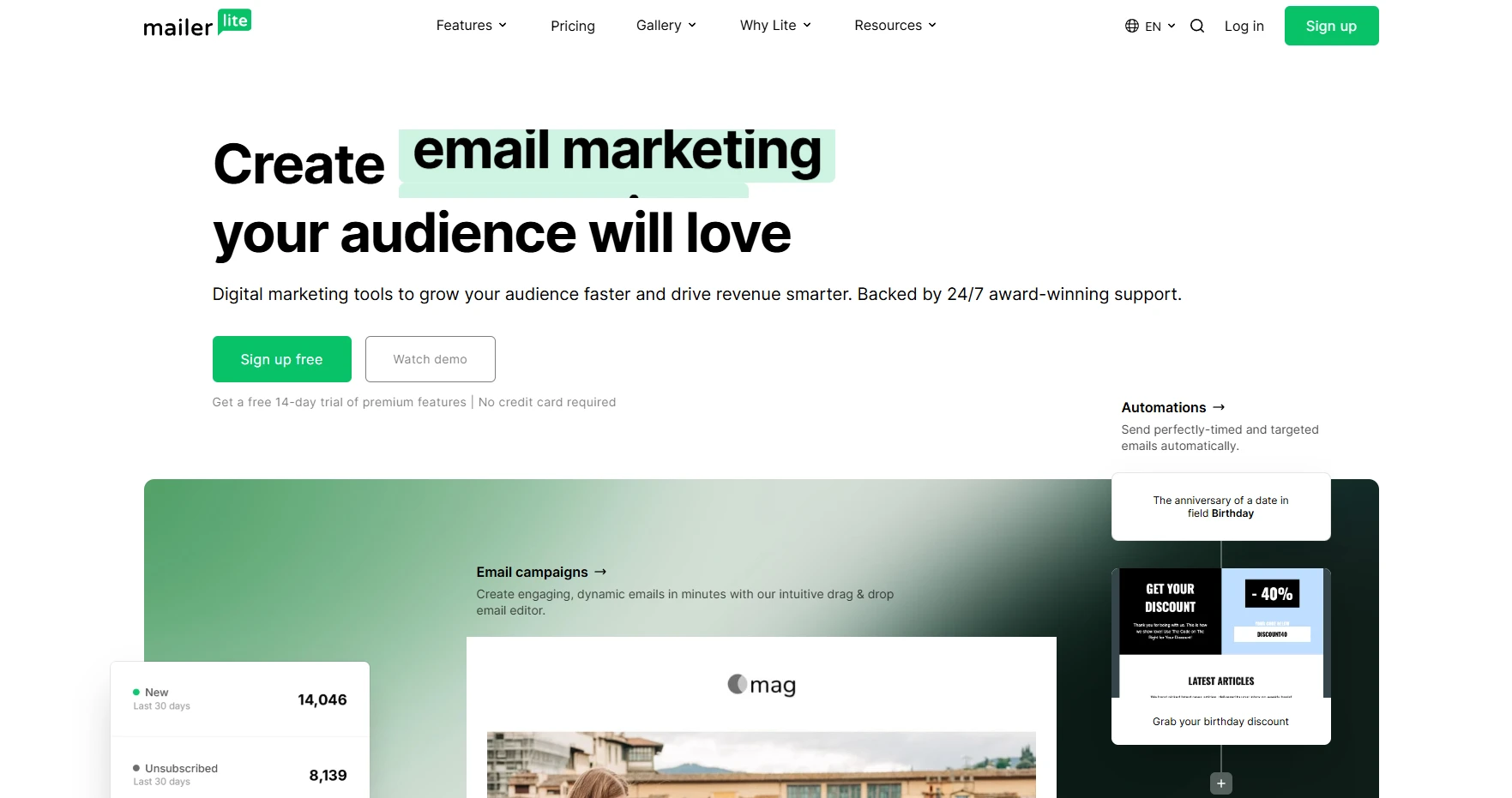
MailerLite is often chosen by startups, creators, and small businesses that prioritize simplicity. It combines email campaigns with signup forms, landing pages, websites, and automation tools.
Its drag-and-drop editor lets marketers build branded messages without design or development expertise. Automated sequences can welcome subscribers, deliver lead magnets, nurture prospects, or follow up after specific actions.
The landing-page and form features are useful for startups that haven’t built a sophisticated marketing website yet. A small team can create a basic acquisition funnel and connect new signups directly to an email workflow.
Pricing: Free plan — 500 subscribers, 12,000 emails/month (reduced from 1,000 subscribers in September 2025). Paid plans from $9/month billed yearly.
Pros:
- Clean, beginner-friendly interface
- Landing pages, websites, and forms included
- Multi-language support including RTL languages
Cons:
- Free plan support ends after 30 days
- Free plan lacks templates and dynamic content
- No native SMS or multichannel tools
Best for: Content-led startups that want email campaigns, forms, landing pages, and straightforward automation in one platform.
3. Brevo — Best for Multichannel and Transactional Email
 Product image: Brevo
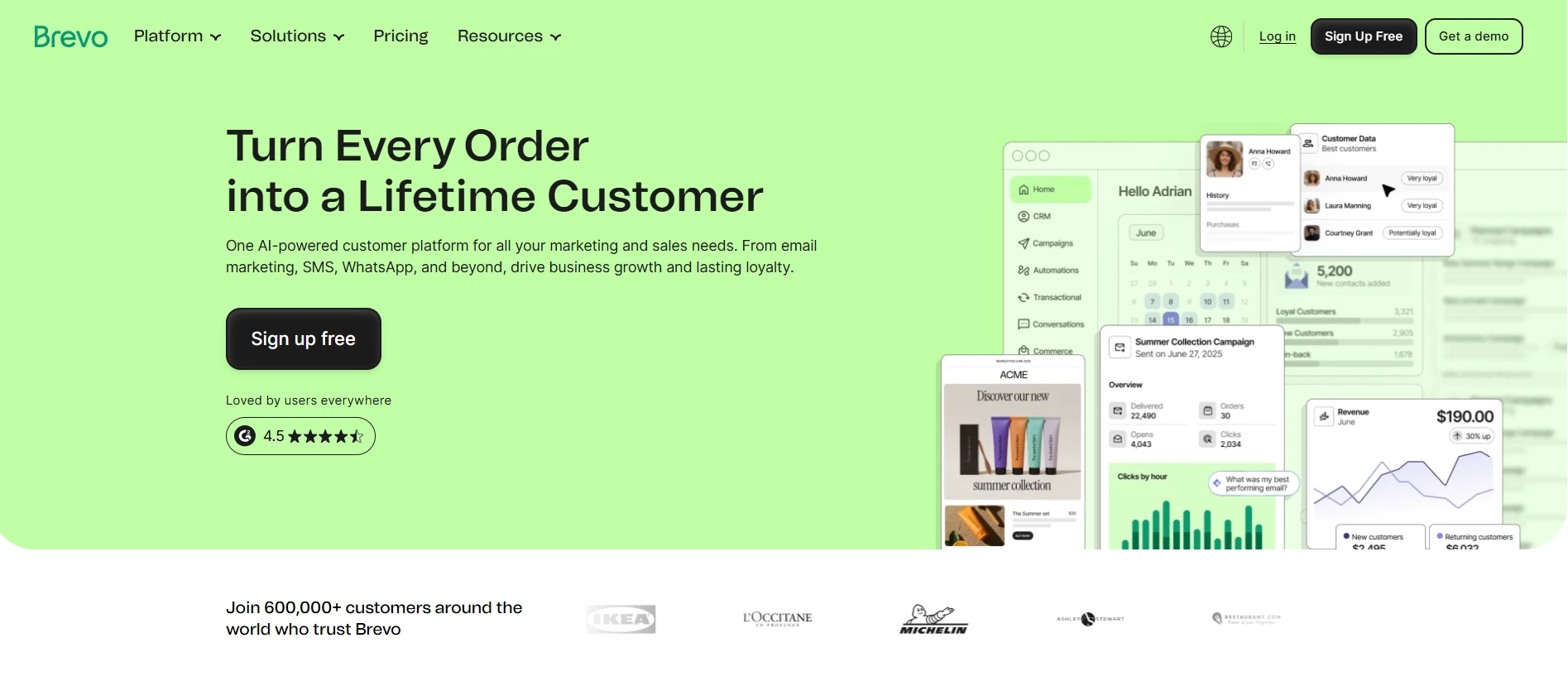
Brevo brings email marketing, transactional email, automation, forms, SMS, and additional communication channels into a broader customer platform.
Its sending-volume pricing can be attractive to companies that store many contacts but communicate with them relatively infrequently — a different model from platforms where cost is driven by total database size.
Brevo supports responsive campaign creation, audience segmentation, automated workflows, and transactional communication, so a startup can manage promotional and operational emails in one connected environment. The availability of SMS, WhatsApp, and chat gives growing teams room to build multichannel campaigns later.
Pricing: Free plan — 300 emails/day with unlimited contacts. Starter plans from $9/month for 5,000 emails.
Pros:
- Unlimited contact storage on all plans
- Transactional email built in — no separate service needed
- SMS, WhatsApp, and chat channels available
Cons:
- 300/day cap on free plan limits campaign sends
- Advanced automation, testing, and reporting gated by tier
- Autoresponders require paid plans
Best for: Startups that want email marketing and transactional communication with the option to add more customer channels.
4. Mailchimp — Best for Integrations
 Product image: Mailchimp
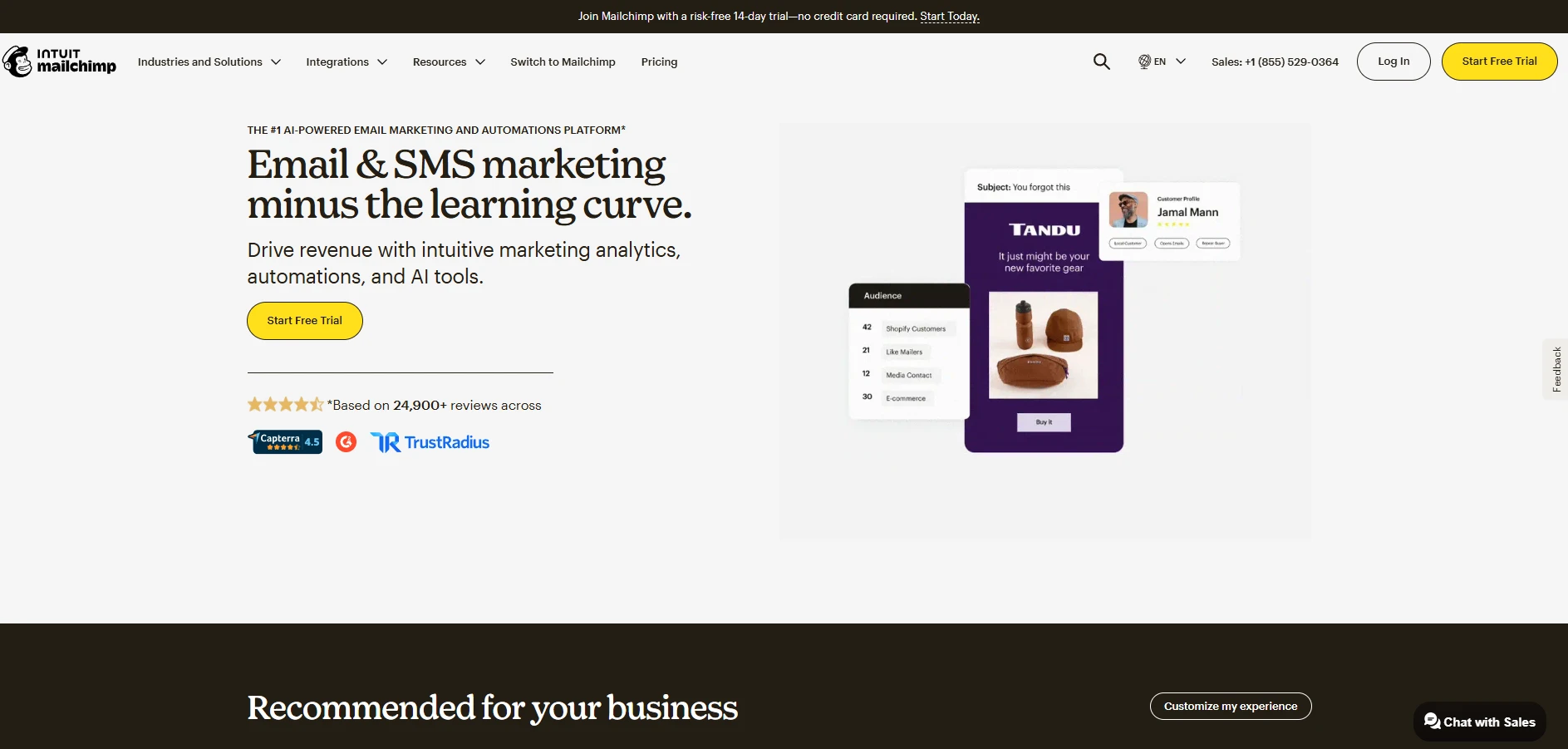
Mailchimp is one of the most familiar email marketing platforms. Its template library, broad integration ecosystem, and guided campaign-building tools make it a common starting point for new businesses.
The platform includes an email editor, audience management, signup forms, landing pages, reports, segmentation, and marketing automation. It connects with hundreds of e-commerce, analytics, design, and business applications.
Mailchimp is convenient when team members already know the interface or when a startup relies on an integration in its ecosystem. Learning resources and a recognizable workflow reduce the effort required to launch a first campaign.
Pricing: Free plan — 500 contacts, 1,000 emails/month. Essentials from $13/month; Standard from $20/month for behavioral targeting and dynamic content.
Pros:
- Largest integration ecosystem in the category
- Extensive templates and learning resources
- Familiar to most marketers and contractors
Cons:
- Costs climb quickly as contacts grow
- Key analytics and targeting features require Standard+
- Pays for brand recognition you may not need
Best for: Early-stage teams that want a widely adopted platform with familiar campaign tools and numerous integrations.
5. ActiveCampaign — Best for Advanced Automation
 Product image: ActiveCampaign
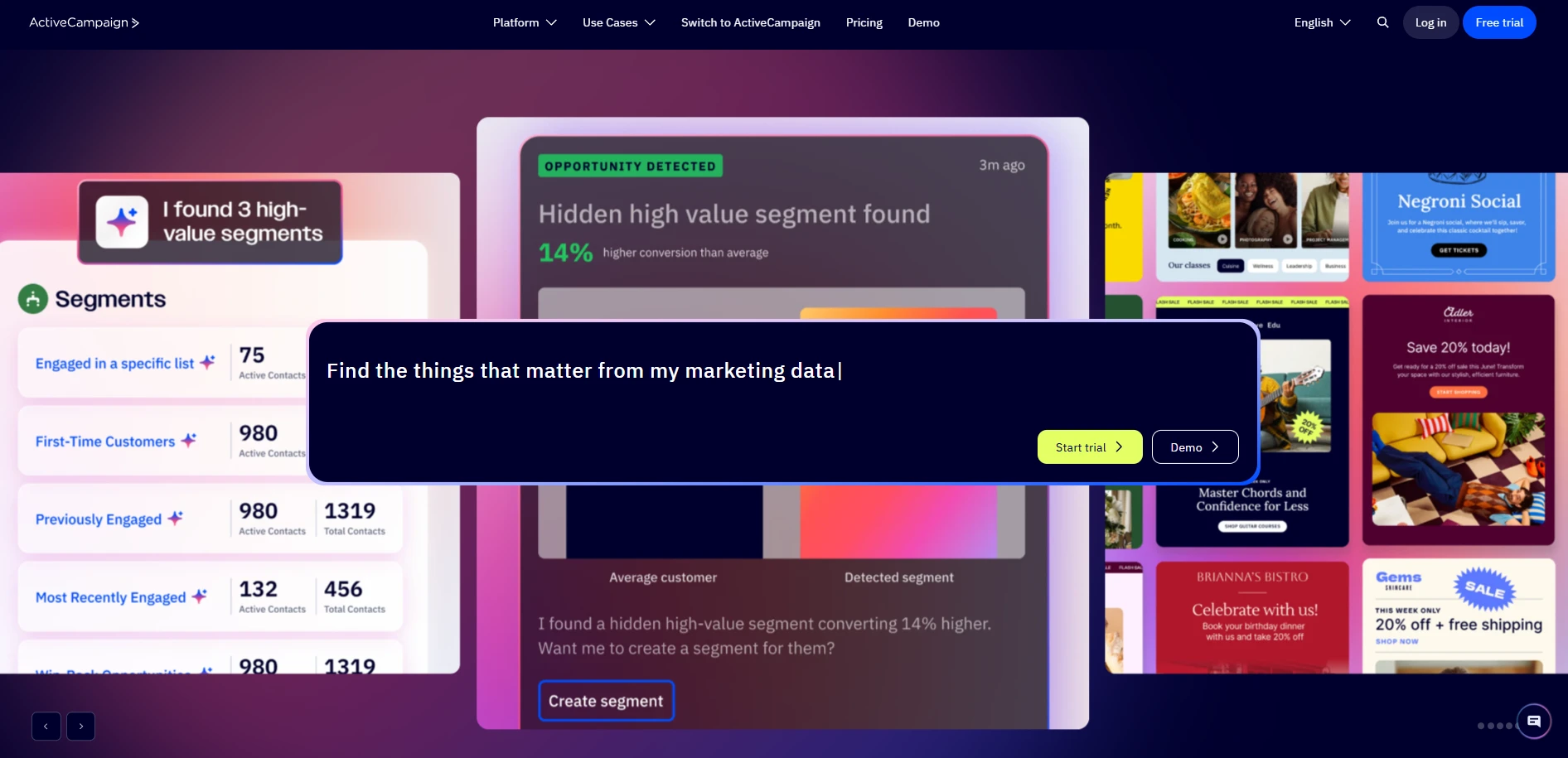
ActiveCampaign is aimed at teams that need sophisticated marketing automation and detailed customer journeys.
Its workflow builder supports branching paths based on customer behavior, preferences, campaign engagement, website activity, and other conditions — letting marketers create different experiences for new leads, trial users, paying customers, and inactive subscribers.
The platform provides advanced segmentation, event tracking, predictive capabilities, cross-channel coordination, and detailed reporting. These tools become valuable once a startup has a defined acquisition funnel and enough customer data to support meaningful personalization.
Pricing: No free plan (14-day trial). Paid plans from ~$15/month for 1,000 contacts, billed annually.
Pros:
- Deepest automation logic in this list
- Behavioral and event-based triggers
- Strong segmentation and predictive tools
Cons:
- No free tier
- Steeper learning curve; requires planning to use well
- Overkill for basic newsletters and simple follow-ups
Best for: Growing startups that need behavioral triggers, advanced segmentation, and complex automated journeys.
6. HubSpot — Best for B2B Startups with Sales Teams
 Product image: HubSpot
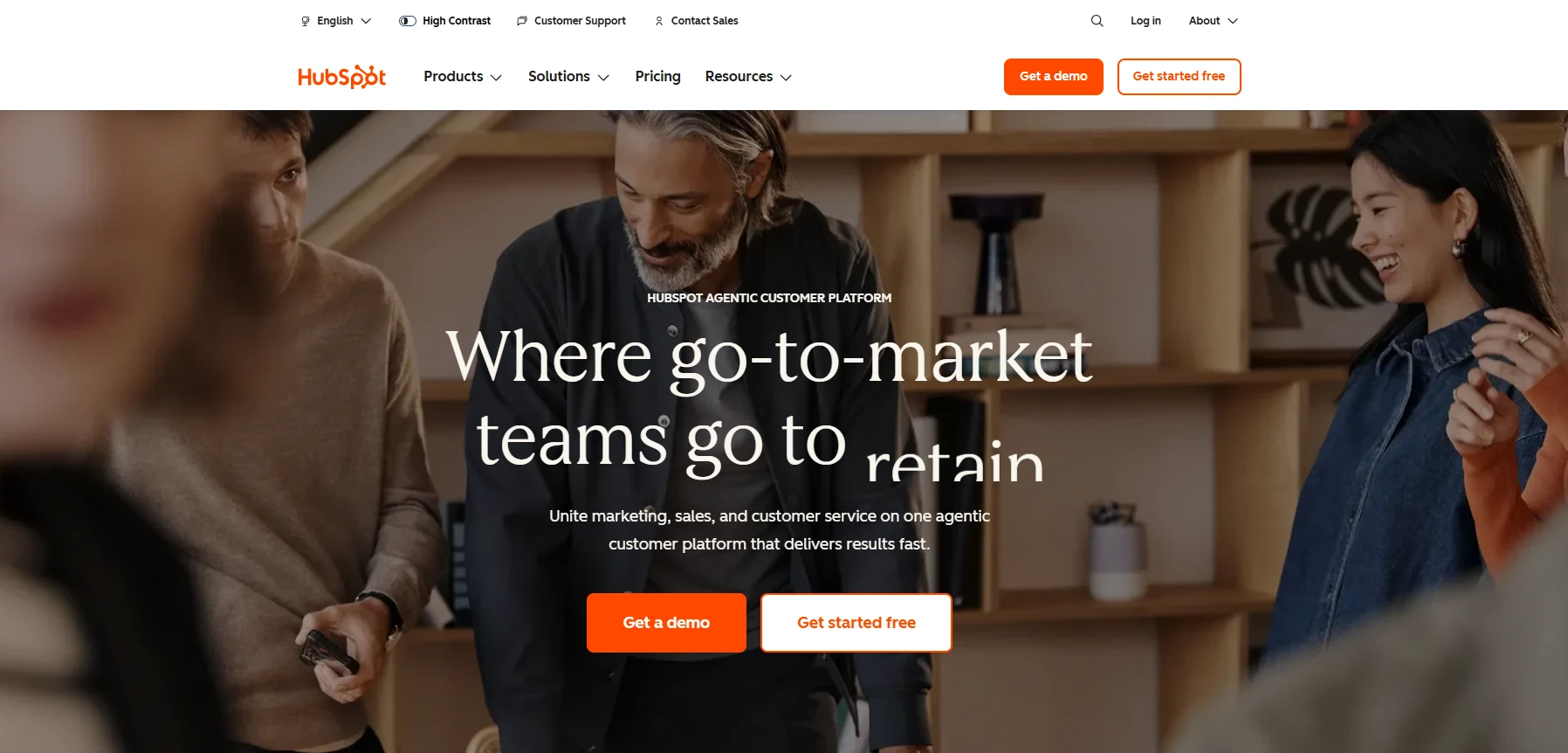
HubSpot connects email marketing with CRM, sales, service, content, and reporting capabilities.
Its main advantage is the shared customer database. Email campaigns can use CRM information to personalize communication according to lifecycle stage, previous interactions, or sales activity. Marketing and sales teams see a lead’s engagement in the same ecosystem — particularly relevant for B2B startups with longer sales cycles, where campaign data and sales records living in separate tools creates gaps.
Pricing: Free CRM with basic email tools (with HubSpot branding). Marketing Hub Starter from ~$15/user/month; costs scale significantly with contacts and advanced features.
Pros:
- Free CRM is genuinely useful for early B2B teams
- Email personalization from CRM data out of the box
- Marketing and sales aligned in one system
Cons:
- Advanced automation and reporting get expensive fast
- Free tier includes HubSpot branding
- Heavier platform than a pure email tool
Best for: B2B startups that want email marketing closely connected to CRM and sales workflows.
7. Kit — Best for Creators and Founder-Led Brands
 Product image: Kit
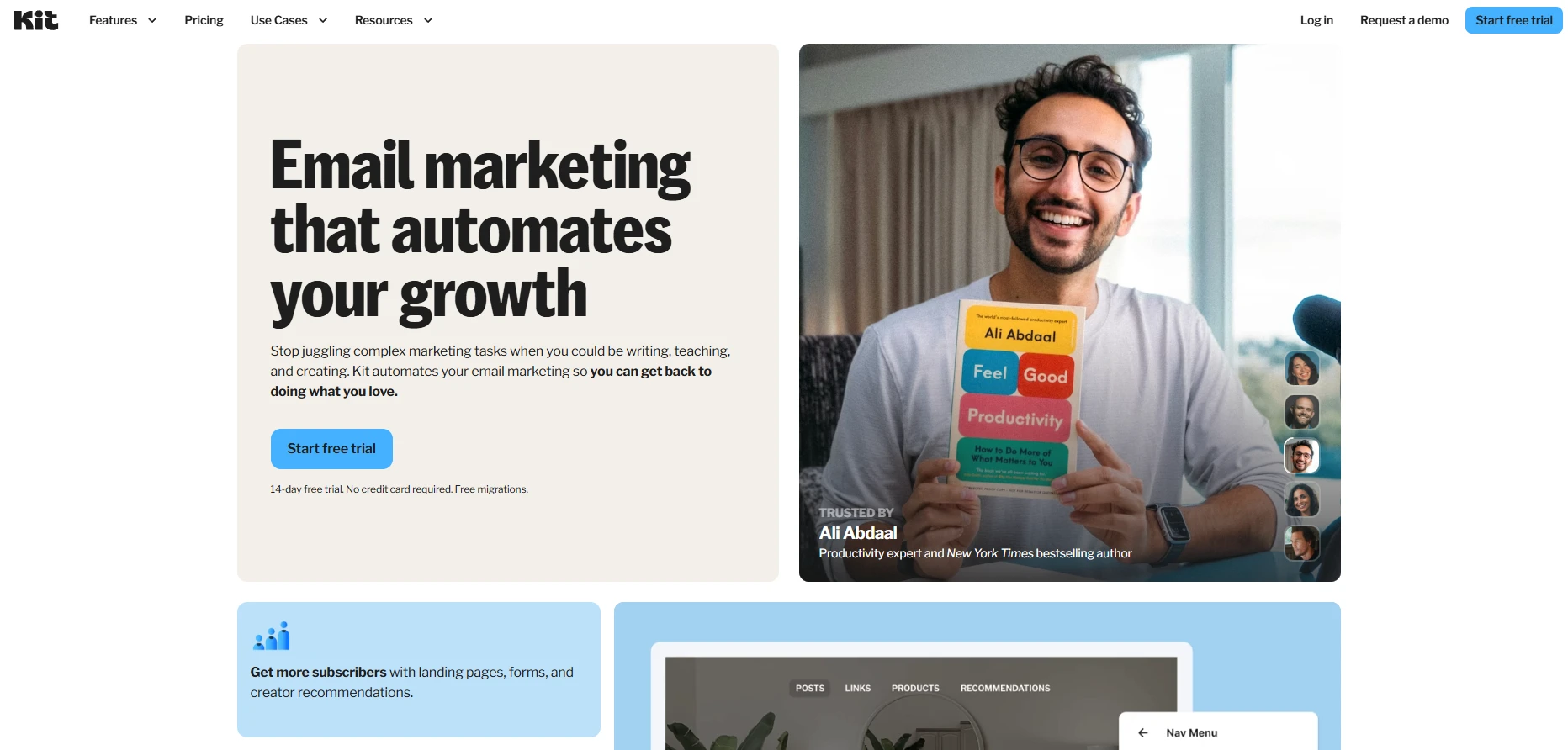
Kit, previously known as ConvertKit, focuses on creators, educators, and audience-driven businesses.
It offers newsletters, signup forms, landing pages, tagging, segmentation, and automated sequences. Its creator-oriented workflow suits founder-led startups that generate demand through educational content, communities, courses, or personal branding.
The tagging model helps teams organize subscribers by interests and actions without maintaining many disconnected lists. Founders can use it to deliver targeted content and build closer audience relationships.
Pricing: Free plan — up to 10,000 subscribers with basic features. Paid plans from ~$25/month for automation and advanced tools.
Pros:
- Exceptionally generous free subscriber limit
- Tag-based organization instead of duplicated lists
- Built-in tools for paid newsletters and digital products
Cons:
- Automation locked behind paid plans
- Plain-text-first design philosophy limits visual campaigns
- Not built for product-led SaaS or complex B2B
Best for: Creator-led startups and founders growing through newsletters, educational content, or digital products.
Best Email Marketing Software for Startups: At a Glance
| Platform | Best for | Free plan | Paid from* |
|---|---|---|---|
| Selzy | Best overall for startups | 1,000 emails/mo to 100 contacts | ~$7/mo |
| MailerLite | Content-led startups | 500 subscribers, 12,000 emails/mo | $9/mo |
| Brevo | Multichannel + transactional | 300 emails/day, unlimited contacts | $9/mo |
| Mailchimp | Integrations ecosystem | 500 contacts, 1,000 emails/mo | $13/mo |
| ActiveCampaign | Advanced automation | 14-day trial only | ~$15/mo |
| HubSpot | B2B startups with sales teams | Free CRM + basic email | ~$15/mo |
| Kit | Creators and founder-led brands | Up to 10,000 subscribers | ~$25/mo |
*Entry-tier pricing, billed annually; verify current rates before publishing — providers change plans frequently.
What Startups Should Look for in Email Marketing Software
Before comparing individual platforms, define what the business needs during the next 12 to 18 months. A pre-launch team collecting its first subscribers has different requirements from a SaaS company with product events, trial users, and multiple lifecycle campaigns.
Ease of use
Most startups don’t begin with a dedicated email operations specialist. Founders and generalist marketers should be able to import contacts, create a branded message, test it, and launch a campaign without weeks of training. A visual editor, reusable templates, clear contact management, and understandable reports save more time than a long list of rarely used enterprise features.
Automation
Newsletters are only one part of a startup email strategy. Automated workflows can welcome new subscribers, nurture leads, onboard users, remind customers about unfinished actions, and re-engage inactive contacts. A useful automation builder supports multiple steps and conditions while remaining easy enough for a small team to maintain.
Segmentation and personalization
Sending every subscriber the same message becomes ineffective as an audience grows. Startups should be able to group contacts by interests, lifecycle stage, engagement, purchase history, or product behavior. Even simple segmentation makes campaigns more relevant for prospects, active users, and customers at risk of churning.
Pricing that remains predictable
An inexpensive entry plan doesn’t always stay affordable. Some providers charge by stored contacts, others by messages sent, and certain capabilities sit behind higher tiers. Estimate your expected database size, sending frequency, number of users, and required automation features before committing.
Integrations and data portability
Email rarely operates in isolation. You may need to connect your platform to a website, CRM, online store, analytics service, or product database. It should also be possible to export contacts and campaign data if you change tools later.
How to Choose the Right Platform
There is no universal winner. The best option depends on your business model, growth stage, audience, and planned campaigns.
Start by defining the first three workflows you intend to launch: a subscriber welcome sequence, a product onboarding series, a monthly newsletter, lead nurturing, abandoned-cart reminders, or a re-engagement campaign.
Next, test whether each shortlisted platform supports those workflows without excessive manual work. Import a small contact list, create a segment, build an automation, send a test campaign, and review the resulting report. Testing the complete process is more informative than comparing editor screenshots or feature checklists.
Estimate future costs at a larger database size: contact limits, sending volume, user seats, automation access, reporting, integrations, and any separate transactional-email expenses.
Finally, evaluate maintainability. A technically powerful platform creates little value if the team can’t confidently update its workflows or understand its reports.
FAQ
What is the cheapest email marketing software for startups?
Selzy and Brevo offer the lowest entry costs. Selzy’s paid plans start around $7/month with unlimited emails, and Brevo’s free plan allows 300 emails per day with unlimited contact storage. MailerLite ($9/month) is close behind. The cheapest option overall depends on whether your cost driver is contacts stored or emails sent.
Do startups really need email automation?
Yes — even a two-message welcome sequence outperforms one-off campaigns. Automated emails drive roughly 37% of email-attributed sales while accounting for only about 2% of sending volume. Start with a welcome series and an onboarding flow; add complexity as your funnel matures.
Which email platform has the best free plan?
Kit offers the largest free subscriber limit (10,000), but with restricted features. Brevo’s free plan allows unlimited contacts with a daily sending cap. Selzy’s and MailerLite’s free plans are smaller but include more of the core toolkit. Choose based on which limit — contacts, sends, or features — you’ll hit first.
When should a startup switch from a simple tool to advanced automation?
When you have a defined funnel, meaningful behavioral data, and campaigns you can’t build with linear sequences — typically after product-market fit, not before. Migrating too early adds setup overhead without payoff; most platforms let you export contacts, so switching later is rarely painful.
Is email marketing still worth it for startups in 2026?
Yes. Email remains the highest-ROI owned channel — you control the list, unlike social or search algorithms. With AI answers reducing organic search clicks, an email list is one of the few distribution assets a startup fully owns.
Final Thoughts
Choosing email marketing software for startups is about balancing current simplicity with future growth.
Selzy offers the most accessible combination of campaign creation, automation, segmentation, and reporting at startup-friendly pricing. MailerLite fits content-driven acquisition, Brevo covers marketing plus transactional communication, and Mailchimp brings familiarity and integrations. ActiveCampaign serves teams ready for advanced automation, HubSpot connects email with CRM workflows, and Kit fits audience-focused founders.
The best platform is not the one with the most features. It’s the one your startup can use consistently to attract leads, onboard customers, and maintain valuable relationships — without diverting excessive time from building the business.